Before the A-League, Soccer Belonged to the Migrant Clubs
Has anybody else noticed the football world cup is on?
I suppose the first thing to ask is – which football? Rugby League, Rugby Union, American football, Australian Rules football, Irish football? Or that round ball game where you’re not allowed to pick the ball up and run like the hounds of hell were after you and people keep trying to throw you on the ground.
We call it ‘soccer’ here. Which strikes me as odd, since it really is the only game you play entirely with your feet. And your head. Unless you’re the goalkeeper. Or Diego Maradonna.
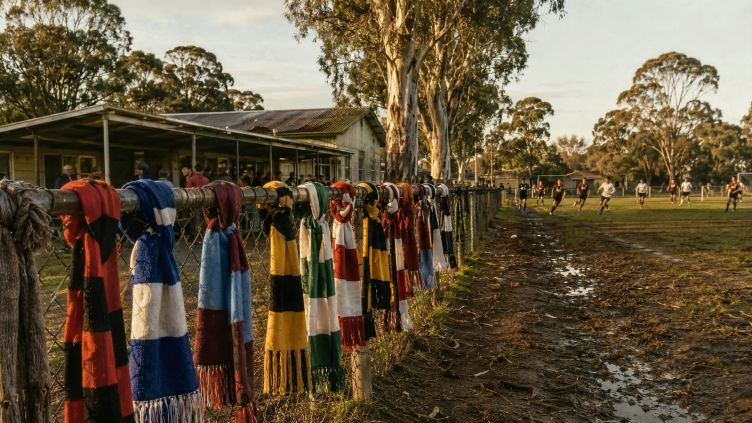
Australia is an immigrant country. We Europeans brought with us the tradition of playing football. Let’s face it, contact sport is a gentler form of gladiators. So, in Perth where I grew up the football teams formed around nationalities.
In the 1960s, Perth soccer had a strong migrant-club identity. Many teams were linked to particular communities. Perth Azzurri and East Fremantle Tricolore were Italian, Windmills was Dutch, Athena was Greek, Kiev was Ukrainian, and Cracovia was Polish. Other clubs had similar roots, including Croatian, Macedonian, Yugoslav, Portuguese, British, and mixed Greek affiliations.
These clubs were more than sporting teams. For postwar migrant communities, they were places to gather, speak familiar languages, share food and culture, argue about football, and feel at home in a new country. Of course, old-country loyalties and rivalries sometimes came along for the ride. Humans. We do like to bring our baggage.
WA soccer changed sharply when several clubs broke away from the old amateur association and formed a new federation. Part of the issue was professionalism, or at least semi-professionalism, because some clubs were already paying players quietly. Official amateur purity on top, cash and fuel money underneath. Very Perth, very human.
And now we have the top layer, a professional national A league. Quite a few Australians play in the European teams, making much more money than they could at home. So, our national team has a bit of talent although we’re nowhere near the top of the pile.
I see the American men are doing well. I expect the success of their women’s team shamed them into putting some effort into the world game.
You’ve probably gathered I haven’t woken up in the wee small hours to watch a bunch of blokes kick a ball around. (Boring) But I did once. I mean, once an immigrant, always an immigrant. I got up to watch Argentina beat the Netherlands in 1978.
The Netherlands have played in three men’s FIFA World Cup finals, and lost all three. Cruel, frankly.
1974, Netherlands 1, West Germany 2
This is the famous “Total Football” final. The Dutch team, led by Johan Cruyff, were the glamour side of the tournament. They scored before a German player had even touched the ball, Johan Neeskens converting a penalty in the second minute. Then West Germany fought back. Paul Breitner equalised with a penalty, and Gerd Müller scored what became the winner before half-time. The final was played in Munich, so the Netherlands lost to the host nation. Ouch. Double ouch. Germany vs the Netherlands is a bit like Australia vs England in cricket.
1978, Netherlands 1, Argentina 3, after extra time
Another final, another host nation. This one was in Buenos Aires and had a hostile, politically loaded atmosphere. Argentina won 3–1 after extra time, with Mario Kempes the key figure. The Dutch were without Cruyff, which mattered. They came desperately close, though. Rob Rensenbrink hit the post late in normal time with the score 1–1. A few centimetres the other way and the Netherlands might have been world champions. Instead, Argentina took over in extra time.
2010, Netherlands 0, Spain 1, after extra time
This was the final in Johannesburg. Spain were the great passing side of that era, and the Netherlands tried to disrupt them, not always prettily. The match was tense, physical, and full of cards. Arjen Robben had the big Dutch chance when he went through one-on-one, but Iker Casillas saved it. Then Andrés Iniesta scored late in extra time, giving Spain their first World Cup. The Netherlands were runners-up again.
Football can be a right sod.
And this year, they’re already knocked out. Boo.
Not that I care. Of course not.
Have you read my free book yet? There’s no football in it – but plenty of other, much more exciting stuff. Grab your free copy here: