Viviers and World War Two
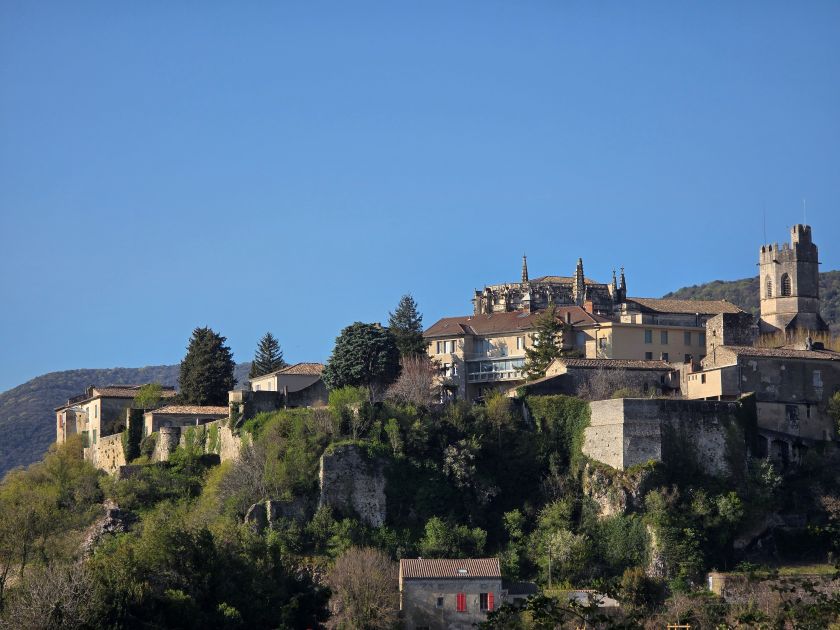
Peter and I had been to the lovely little town of Viviers before, back in the Days of Covid. We were on a river trip that went up the Seine to Normandy and back to Paris, where we caught a train to Lyon for a cruise on the Rhône . We’re fairly sure we picked up covid at the Palace of Versailles, so for most of the southern France stops on that trip we were confined to our cabins. Separate cabins, I might add. Romantic, it was not. But since our taste in movies is quite different, it was just as well.
We travelled toward the end of the covid panic, so the rules had eased a little, and we were allowed off the boat once the tour groups had cleared off, which is how we first saw Viviers.
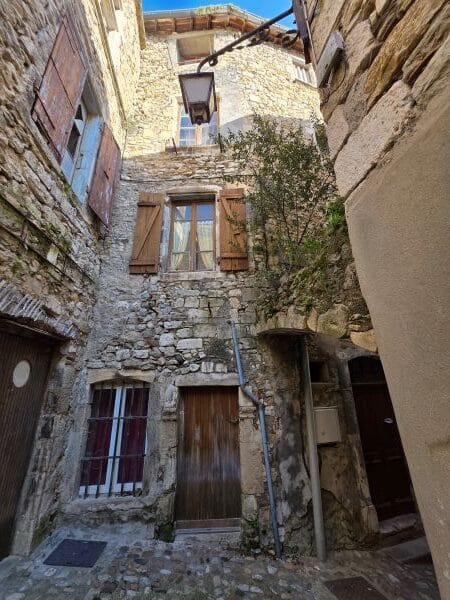
It’s a place that sticks with you. Small, well preserved, and blissfully untouched by bombing during the Second World War, it still feels like a town that grew naturally over centuries rather than being rebuilt in a hurry. The streets twist and turn in a proper maze, lined with buildings made from the local pale limestone. Everything seems to climb toward the cathedral on the hill, which is pleasant rather than grand. The Cathedral of Saint-Vincent holds the clue to Viviers’ importance. It was a bishop’s seat for centuries, which made it a religious centre in the region.
Parts of it date back to the 11th century, with later additions, so like most things in France, it’s a bit of a historical patchwork. Last time we were here the spire had been struck by lightning, which felt like a bit of drama in an otherwise calm setting. Here’s my blog of that earlier visit.
Viviers has deep roots. It began as a Roman settlement on the Rhône and later became the seat of a bishop, which gave it importance far beyond its size. That long history is written into the town itself, in the layout, the stone, and the sense that not much has been rushed or replaced. Unlike many towns in France, it escaped serious damage during the war, which is why it still feels so authentic.
This time around things were a little less convenient. Instead of docking right beside the town, our boat was parked at an industrial site on the opposite bank, so it was buses in and out rather than a casual stroll.
This time we were offered 3 tours
- the usual guided walk
- a French Resistance tour
- a World War Two tour
We would have liked to do the French resistance tour, but it was fully booked so, we signed up for the World War Two tour, which sounded promising. Our guide, an Englishman and clearly a passionate student of the war, knew his subject inside out. Unfortunately, he also knew absolutely everything about it and seemed determined to share the lot. Within minutes we were knee deep in troop movements, commanders, and long strings of names. George Patton made an appearance, along with a German general whose name neither of us could catch, let alone remember. The campaign to liberate southern France was no doubt fascinating, but we began to wonder what any of it had to do with Viviers itself.
To be fair, the Rhône valley did see movement during the war. After the Allied landings in southern France in August 1944, German forces were pushed north, and resistance groups were active in the countryside, blowing things up, passing on information, and generally making life difficult. But Viviers itself wasn’t a focal point. It seems to have sat quietly while history moved around it. I must add that it would have been fascinating to listen to our guide’s stories maybe in the ship’s lounge, with maps and graphics to explain what happened. But Viviers really wasn’t part of the action.
At that point, Pete and I did what sensible people do when faced with an oncoming tidal wave of detail. We peeled off.
We wandered back into the maze of streets, took a few photos, and enjoyed the town for what it is rather than what someone could lecture about. Sometimes that’s the better way to travel. No dates, no generals, just old stone, quiet corners, and the feeling of a place that has seen a great deal and chosen not to make a fuss about it.
Eventually we made our way back to the coach, having learned very little about military strategy, but quite a lot about when it’s time to walk away and just enjoy where you are.
If you enjoyed this article you might enjoy my books. My science fiction romance book The Iron Admiral: Conspiracy is free if you sign up for my newsletter. It’s fast-paced action all the way as star-crossed lovers race to stop a holocaust.
If you’ve missed any of the posts for this trip, go here. Europe 2026