The Aqueduct at the Pont du Gard
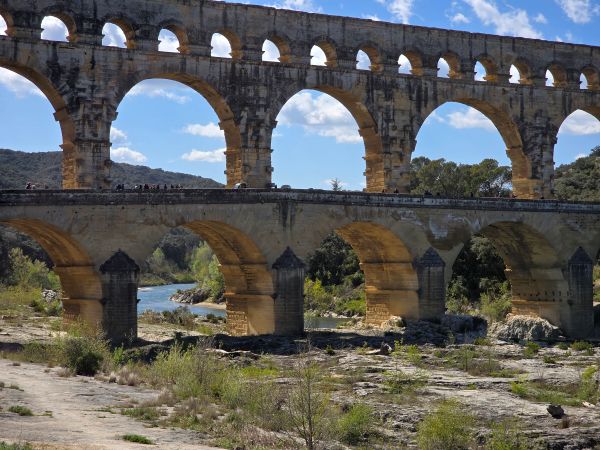
We visited the Pont du Gard on a clear, bright afternoon that the Mistral turned absolutely freezing. The sun looked inviting, but the wind had other ideas, driving hard and cold down the valley carved by the Gard River.
It’s an astonishing sight. Three tiers of arches stacked one on top of the other, span the gorge with a kind of effortless confidence. It’s about two thousand years old, built by the Romans to carry water from springs near Uzès to the regional capital of Nîmes. Not a short distance either. The whole aqueduct ran for about fifty kilometres, all on a precise, gentle gradient so the water would flow without any need for pumps.
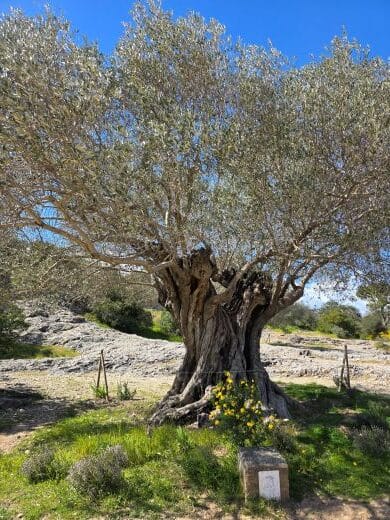
Walking along the path toward the bridge, we passed a number of gnarled olive trees, twisted and silvered with age. Some of these trees really are incredibly old, several centuries at least, though claims of a thousand years tend to be more enthusiasm than fact. What is true is that severe frosts over the centuries, particularly the brutal winter of 1709, wiped out many olive groves across southern France. Replanting followed, sometimes using stock from other regions, including Spain. So yes, climate has always had its say, long before modern debates got going.
There’s a museum near the aqueduct that explains how it was built and gives a glimpse into Roman society at the time. The construction itself is a masterpiece of practical engineering. The Romans erected large wooden frameworks to support the arches while they were being built. Onto these, they placed carefully cut limestone blocks from a nearby quarry. The stones were shaped so precisely that they locked together under their own weight, which is why no mortar was needed in the main structure.
The real genius lies in the precision. The water channel at the top drops only about a few centimetres per kilometre. Too steep and the water would damage the channel, too shallow and it wouldn’t flow at all. Getting that right over such a long distance, without modern instruments, is impressive by any standard.
In later centuries, the structure was adapted and repaired. A road bridge was added alongside the lower level in the 18th century to allow easier crossing of the river, which, while practical, did alter the original form. By the 19th century, attitudes had shifted, and efforts began to focus on preservation rather than convenience. Restoration work was carried out to stabilise and protect the aqueduct, recognising it for what it is, one of the finest surviving examples of Roman engineering.
Standing there with the wind howling through the arches, it doesn’t feel like a ruin. It feels like something that was built to last, and has.
If you enjoyed this article you might enjoy my books. My science fiction romance book The Iron Admiral: Conspiracy is free if you sign up for my newsletter. It’s fast-paced action all the way as star-crossed lovers race to stop a holocaust.
If you’ve missed any of the posts for this trip, go here. Europe 2026