Avignon and the tale of two popes
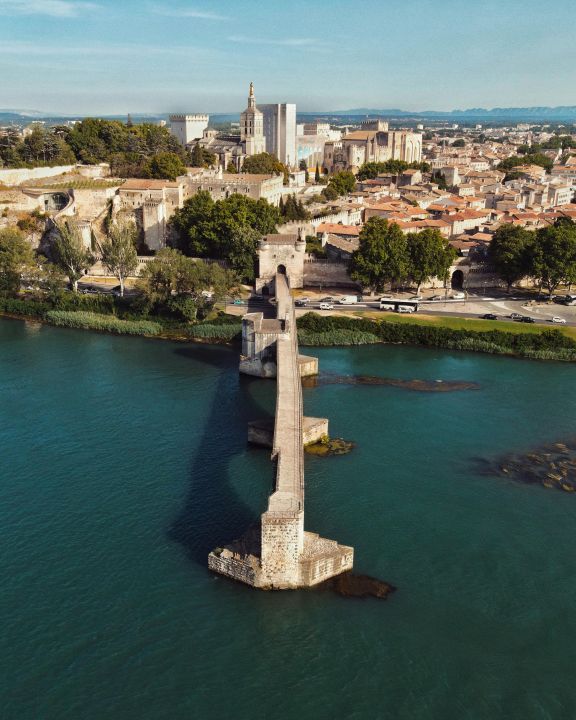
Avignon is one of the many cities along the Rhône that began life as a Roman settlement. The Romans knew a good spot when they saw one, and the river was a major highway through Gaul. But Avignon’s real claim to fame came much later, in the Middle Ages, when things in the Church went spectacularly sideways and the world ended up with not one pope, but two. One in Rome, and one in Avignon.
As you’d expect, this wasn’t about religion so much as politics. In those days, power sat in an uneasy partnership between the nobility and the Catholic Church, and the two were often tangled together. Second sons of noble families were pushed into church careers, and influence flowed both ways. The papacy itself had become deeply political, with factions, rivalries, and a fair bit of arm-twisting. Eventually, the French crown exerted enough pressure that the pope relocated to Avignon in the 14th century, setting up what became known as the Avignon Papacy. Not everyone agreed with that move, which is how we ended up with a rival pope back in Rome. Messy doesn’t begin to cover it.
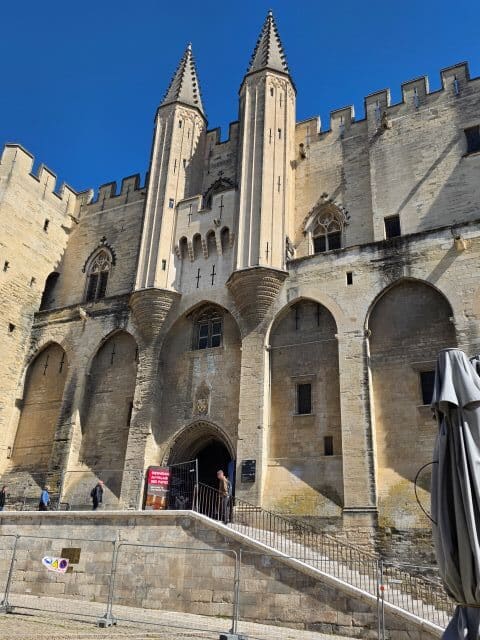
At the heart of all this sits the Palais des Papes, the Papal Palace, and it’s an absolute brute of a building. It’s the largest Gothic palace in the world, and it looks less like a palace and more like a fortress. Thick stone walls, high towers, narrow windows, everything about it says defence first, comfort a distant second. Inside, it once held chapels, audience halls, private apartments, and the machinery of a medieval court that was as much about power as it was about faith. Today, it’s mostly bare stone, but you can still feel the scale of what went on there.
The city itself is a pleasure to wander. Avignon is still enclosed by its medieval walls, which loop around the old town and give it a sense of being contained, almost protected. Inside, there are narrow streets that twist and turn, opening suddenly into small squares. Around the Hôtel de Ville and the space in front of the Papal Palace, there’s a bit more room to breathe, along with cafés and the usual mix of tourists and locals getting on with their day. The Mistral was in full force when we were there, cold and relentless, but once you were inside the walls it lost some of its bite, which was a blessing.
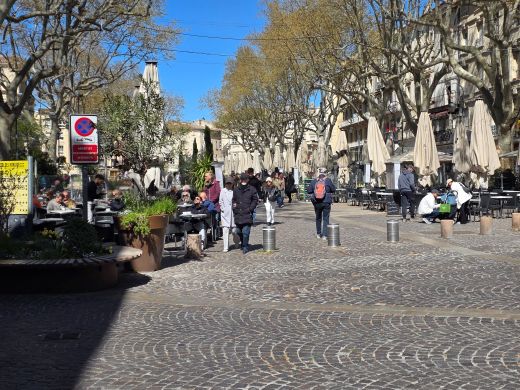
We went to a pharmacy here – just look for the green cross – and found a lovely lady who wasn’t at all grumpy about having to speak English. In full-on tourist towns like this one it’s important to get on with the customers.
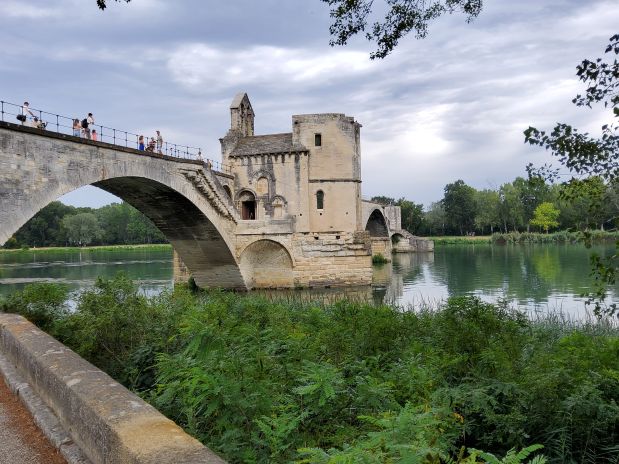
And then there’s the famous Pont d’Avignon. Or what’s left of it. Originally built in the 12th century, it once stretched right across both sections of the Rhône, but the river has a temper. Floods repeatedly damaged the bridge, knocking out sections over the centuries. Each time, it was repaired, until eventually the townsfolk had had enough. They abandoned the idea of maintaining the full crossing, leaving four arches out of the twenty-seven. These days, it doesn’t go anywhere, but it’s still one of the most recognisable sights in France, helped along by that song everyone half remembers.
If you enjoyed this article you might enjoy my books. My science fiction romance book The Iron Admiral: Conspiracy is free if you sign up for my newsletter. It’s fast-paced action all the way as star-crossed lovers race to stop a holocaust.
If you’ve missed any of the posts for this trip, go here. Europe 2026