Nitmiluk
It’s only a few hours from Darwin to Katherine, with the train wending its way through the sclerophyll forest, crossing rivers and passing farms. Some of those hours were spent enjoying lunch in the dining car.
Peter and I had visited Nitmiluk (the local name for the gorges) before. It’s an impressive place and I was looking forward to another look and an opportunity for better pictures. It was a relatively hot day, the temperature in the mid 30s and with fairly high humidity. When we gathered at the river to board the boats, the local administrator gave us a lecture. “Stay hydrated,” he said. “Take your water bottles and use them. It may be 35 here but in the gorges it’s going to be well over 40. We’ve already had to stretcher out some visitors. Don’t add to the number.” He handed out bottles of water as we boarded the boats.
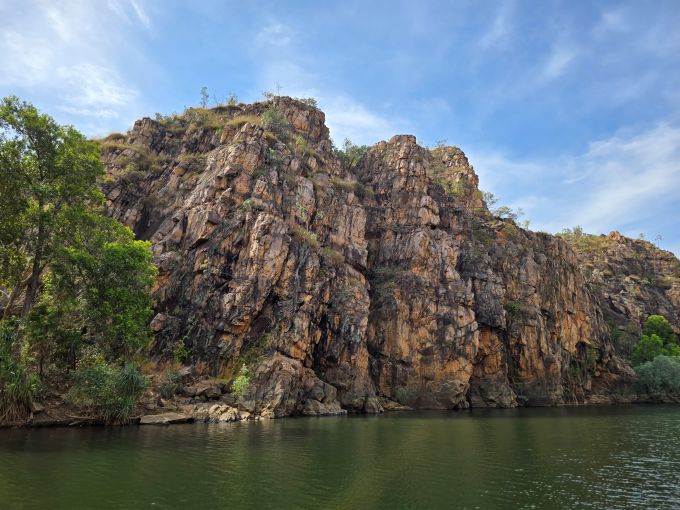
The gorges of the Katherine River were carved over millions of years as water cut through the ancient sandstone of the Arnhem Land Plateau. Seasonal monsoon rains sent torrents of water down the river, gradually deepening cracks and faults in the rock until sheer-walled gorges emerged. Today, the river winds through a series of thirteen gorges, their cliffs exposing layers of sandstone up to 1.65 billion years old, a record of deep geological time shaped by erosion and weathering.
Of course, the local Jawoyn people have a different story. The gorges of the Katherine River were created by Bolung, the Rainbow Serpent. Bolung travelled through the land in the Dreaming, shaping the river and carving out its steep cliffs as he moved. He is still believed to dwell in the deep pools of the river, a powerful and dangerous spirit who must be treated with great respect. For the Jawoyn people, the gorges are not only a dramatic landscape but also a sacred place tied to their ancestral law and spiritual identity.
“Nitmiluk” is a Jawoyn word that means “place of the cicada dreaming.” According to Jawoyn tradition, when the cicada called out along the river, the sound carried through the gorges and alerted Nabilil, an ancestral being, to the land and water. That moment gave the Nitmiluk Gorge area its name.
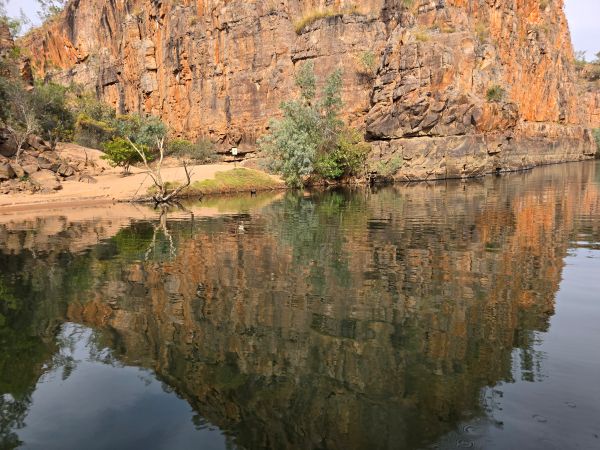
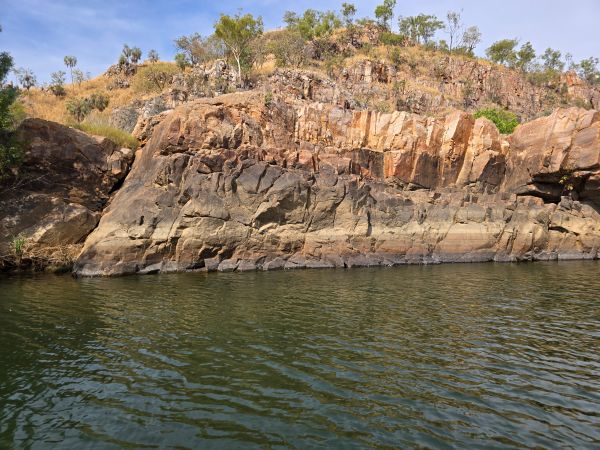
Visitors like us are taken on shallow draft boats up the first gorge, with the operator explaining as we went. The river relies on the annual wet season (December to February) and at this time the water levels were dropping. He showed us rock ledges a good 10m over our heads and told us in the wet season the boat would glide over them. There are Johnson River crocodiles (fresh water crocs, or ‘freshies’ in Australian) in the river and they use the sandy banks to lay their eggs. At this time of year they’re seldom seen.
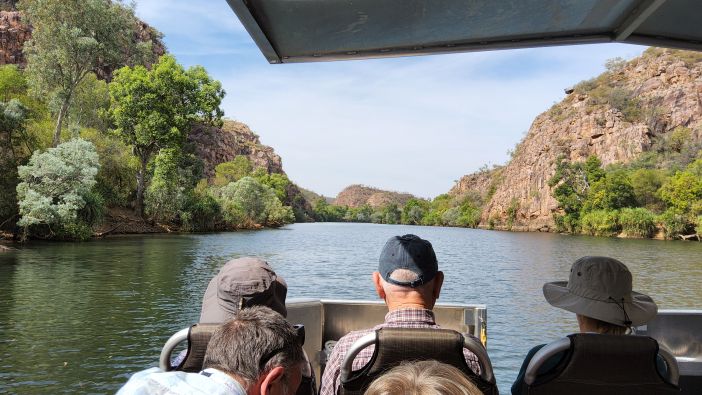
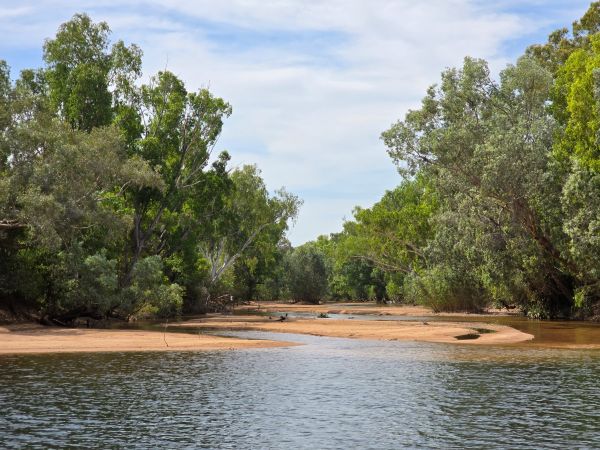
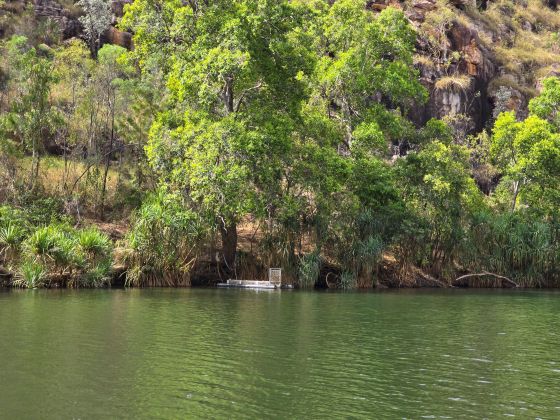
Rangers make sure there are no salt water crocodiles (we call them salties) in the river. They can reach here during the Wet and regular patrols are made at that time to check for them. As I’ve mentioned before, for salties, people are dinner. We drifted past a trap set up for any salty that had managed to sneak in. People don’t swim in the first gorge. One reason for that is the creek which is an ideal spot for a lurking salty.
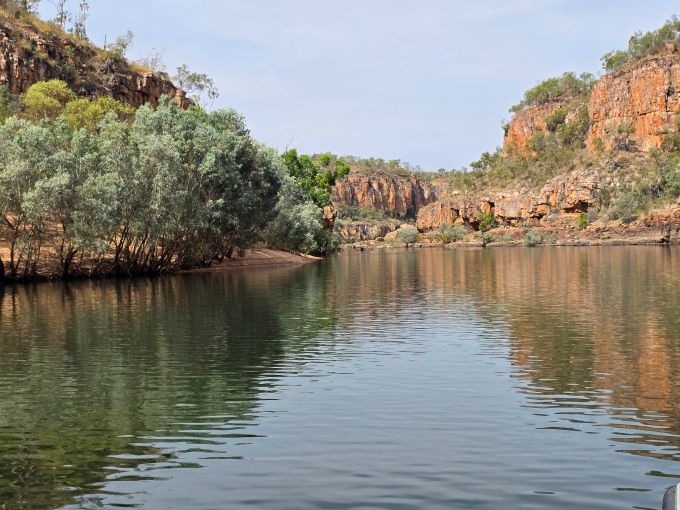
The boat was moored at the end of the gorge and we had to walk about 700m along well-defined (for the most part) tracks to the second gorge. Anyone who found the going hard could stay at a shelter until the rest of us returned. And once again we were admonished to ‘drink the water’.
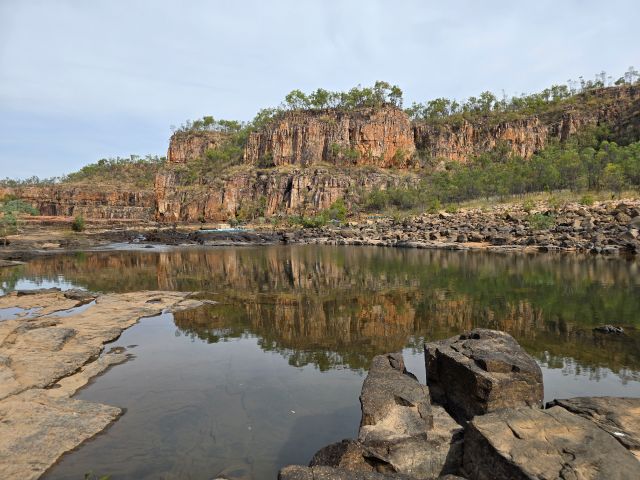
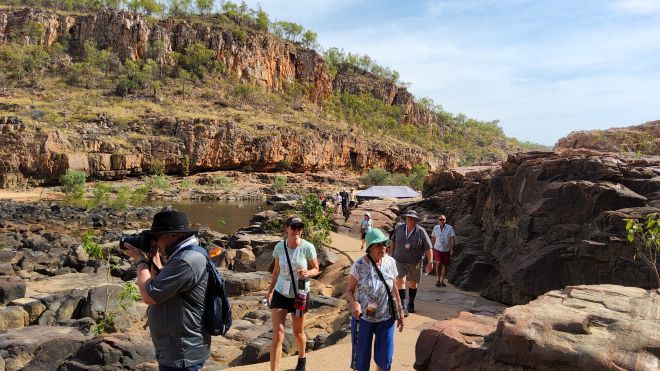
The first gorge is impressive without a doubt but the second gorge raises the stakes. The cliffs rise out of the water, towering above us. We pass (one of) the deepest parts of the river which is around 30m deep. This is where Bulong lives. The local people will not enter the water in the second gorge but allow visitors to do so.
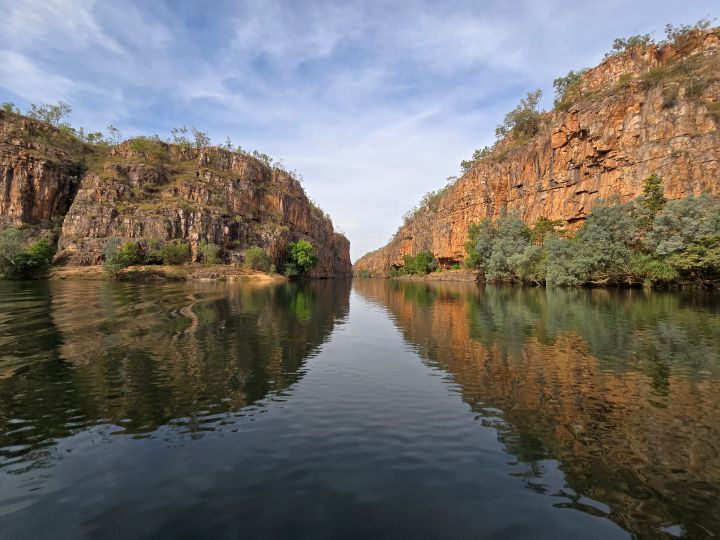
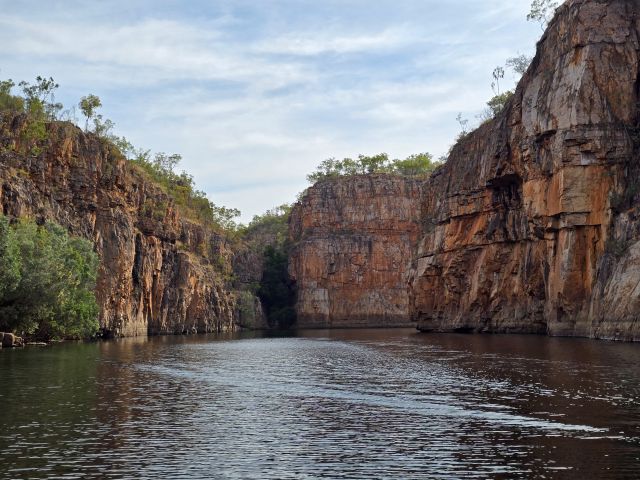
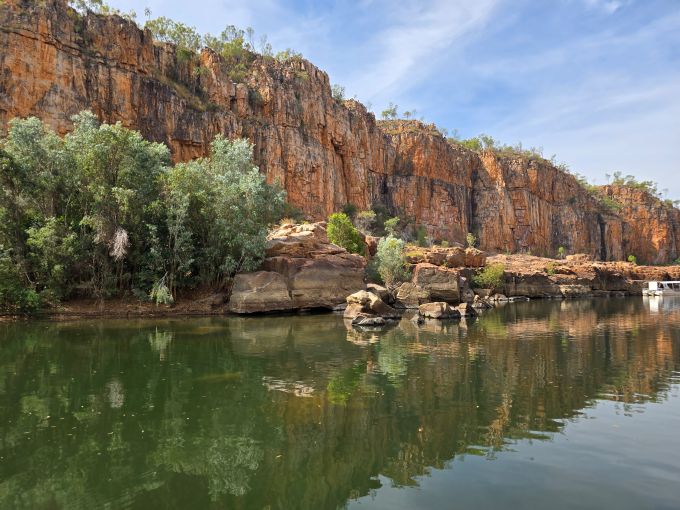
Here’s a very short video I took.
The rangers here love the place and it’s easy to see why. Intrepid hikers could climb up to the top of the cliffs and journey along to the other gorges. It would be spectacular but those days are past for me.
On the way back to the train our bus driver gave us a quick Cook’s tour of the town of Katherine, a small, thriving community out in the harsh Australian bush. One reason for that is its proximity to RAAF Tindal.
Tired but happy, we returned to the Ghan for a drink before dinner.
By the way, if you’ve happened across this post by accident, see the whole trip here.