The impressions that linger
The Europe trip this year is already receding into history. Which is why I write the blogs. The blogs don’t cover everything. They can’t. They catch the places, the moments, the things we thought worth writing down at the time. But step back from the detail, and something else starts to emerge, the impressions that linger long after the specifics begin to fade.
I’ve been doing some navel-gazing about overall impressions, the broad sweeps where the blogs are points on the canvas. So…
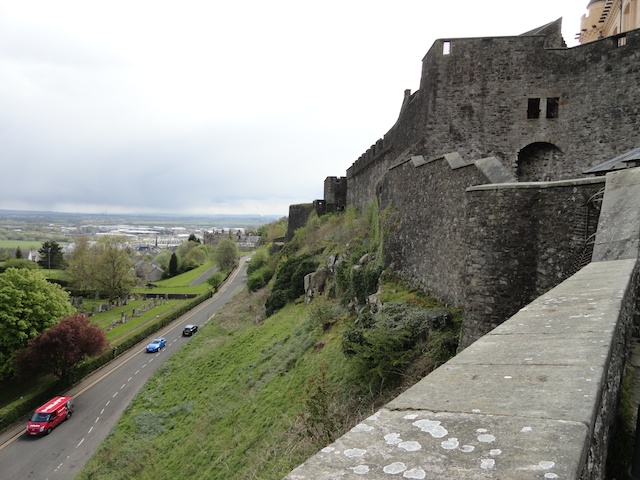
Our impression of Eastern Europe is that it’s a basket case. Sure, there are some bright spots. I expect the Adriatic coast is not quite so destitute. But travel into the countryside and what you see is deserted villages, houses falling apart from neglect, unfinished buildings, and rubbish on the roadsides, especially at laybys for traffic. No wonder there was a scramble to escape to the affluent West.
Even so, religion is clearly still strong. We were proudly shown old churches which were havens for Christianity during the long years of Ottoman rule. The magnificent orthodox cathedral in Bucharest is very modern, paid for by the public. It contrasts with its shabby surroundings and unkempt footpaths, paid for by the public purse.
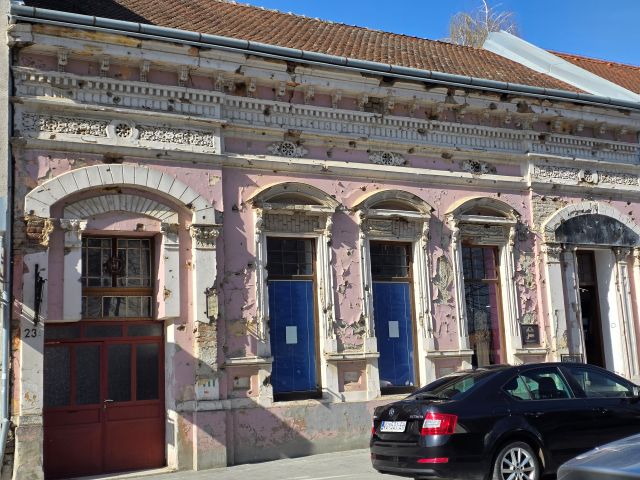
In Bucharest and Vukovar the remnants of destruction caused in the war forty years ago are still evident. They can’t afford to fix the buildings. I’m sure that’s true of many other places. And while Bucharest is blessed with some wonderful architecture, when we visited the ‘old’ town centre, it didn’t do to look up. Mould, damage, collapsing balconies… Repair is expensive, especially if there are preservation rules in place. But we had the feeling that people didn’t care.
Even the fabled Iron Gates was disappointing. In contrast to the Rhine Gorge the river glides between tree-covered slopes. The much-vaunted ‘face’ is relatively modern, as is a monastery on the banks. But there is a marker left by the Romans. They built a road along the river’s bank, a formidable task. The modern road follows basically the same route. That’s impressive.
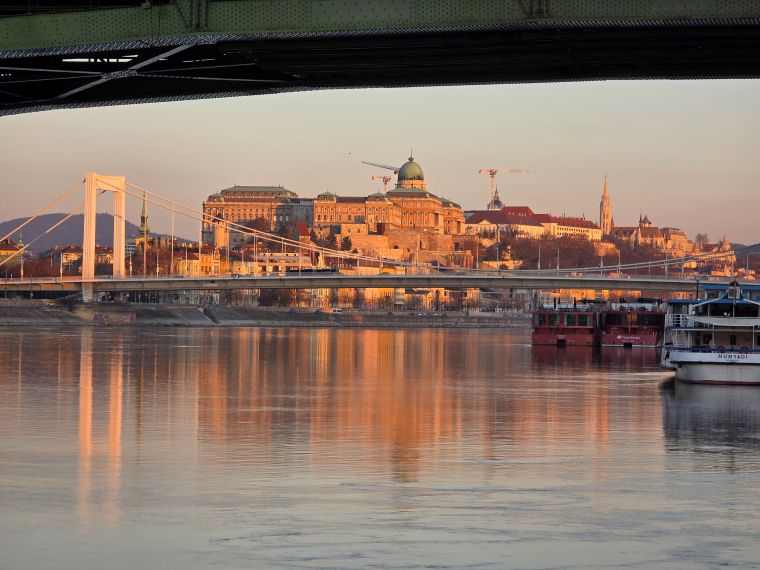
Like many places in Western Europe, the stench of anti-semitism is easy to find, particularly in Budapest where we visited the synagogue, a haunted place scarred by misery, and walked along the Danube’s banks near the shoe memorial where Jews were ordered to take off their shoes (valuable in wartime) before being shot, their bodies floating down the Danube. The Nazis found it easy to get the locals to do their dirty work for them.
The contrast to the South of France was stark.
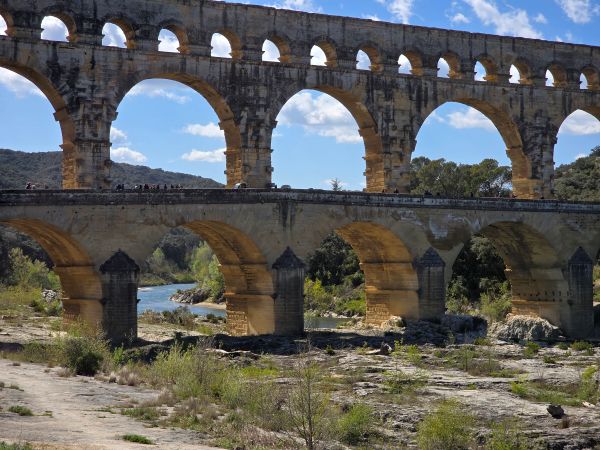
In particular, we noted that roadsides and towns were clean. There was real pride in the Roman historical sites. The Pont du Gard was simply awe-inspiring. The Roman theatres in Vienne and Arles, and the amphitheatre in Arles are part of the town and still used.
France had its Revolution in 1789 and the impact of that event is (to me) quite incredible. I read Medieval history at university, so I was aware of the importance of the great abbey at Cluny. Visiting its remains underlines how transient we humans and our works can be.
That’s true in the delightful town of Avignon, too, where the once magnificent Papal Palace was looted and vandalised during the Revolution and used by Napoleon as a barracks. Today much of the interior is empty.
That’s in stark contrast to Versailles, which we visited on a previous trip. It survived not because it was loved, but because it was useful. It held assets that could be sold, and now it more than earns its keep from the millions of visitors it attracts. Cluny became a quarry, its stone used to build something more practical.
We’ve been on quite a few Rhine Main Moselle Danube cruises since our first in 2015. We love that you get on the boat, unpack once, and from there everything is done for you. Good food, your bed’s made, bathroom cleaned. The biggest decision is whether to go on the next excursion in the next town.
But it has become too popular. Several times we were moored with two other ships beside us. Give it time and you’ll almost be able to walk from Amsterdam to Budapest on the sundecks of the ships.
And then there’s the wider world. Events in the Middle East have already had an impact. Our flights via Dubai were cancelled. Flying is more expensive, and even road trips at home may need rethinking because of fuel costs.
But there’s always another way to travel.
I can still get away in the privacy of my own head, using those memories to bring to life the places I write about, somewhere in a distant galaxy, some time in the future.
That’s where my stories live.
The Iron Admiral: Conspiracy draws on the same kind of history we’ve seen before. In 1939 a staged incident, a manufactured outrage, set the machinery of war in motion.
Set among the stars, it’s a fast-paced science fiction adventure with a slow-burn romance at its core. A disgraced admiral and a woman who doesn’t trust him are forced to work together to stop a catastrophe that could destroy millions.
It’s the first book in my Ptorix Empire series, and you can get it free when you join my newsletter. Tap on the image.

If you’ve missed any of the posts for our 2026 European trip, go here. Europe 2026