The Quiet Shift We Barely Noticed
There’s been a quiet shift in the background of everyday life, and most of us have absorbed it without quite realising what we gave up along the way. It’s not dramatic. There was no vote. No announcement. No single moment where things changed. It just sort of… happened.
Try to do something simple now like park your car, catch a train, visit a museum. Or if you’re travellers like us, get on a plane. One of the reasons we pony up and pay for business class air fares is because it makes getting on the plane so much simpler. You just rock up to the desk with your bag and hand the nice lady your passport or your driver’s licence. Or you used to. There’s been a quiet shift in air travel. You check in from home (or your hotel if you’re OS.) You download a boarding pass on your smart phone (you do have one, don’t you?) If you’re home you can print a boarding pass – harder if you’re at a hotel.

Then you go to the airport and line up for one of the self service bag things. Fish out your passport. Find somebody to help you with the bloody machine. Print your bag tag and hope the nice lady will put it on for you because every time we do it, it gets tangled up and sticks to all the wrong places. Then you get to queue up to do the bag drop thing.
And after that you go through immigration. Sure, the gateways that scan your digitally enhanced, very expensive passport make the whole process much faster. If it works. Otherwise you line up for the manned checkpoint where a serious looking individual compares your jet lagged face with the godawful passport photo. (I couldn’t believe Amsterdam’s airport, Schiphol, didn’t have digital gates for people from Australia.)
Many years ago last century Peter and I were going to Sydney for the weekend from Victoria. Peter is a glass half full person. He tends to leave things to the last minute. We had a long drive to the airport since we lived in the country. Halfway there he said, “Damn. I forgot my wallet.” He’d also forgotten to bring a tie, but that was slightly less important. No wallet = no money, no drivers licence, and no Qantas frequent flyer card. That last was important because it would get us into the Qantas lounge.
There was none of the security tango back then. No unpacking half your carry-on to display your tablet or laptop, no transparent bag for your toiletries, no taking off your belt and shoes, no standing in a cylinder to be X-rayed like a criminal being put in prison. No alerting the authorities to the existence of your underwire bra, leading to getting patted down by a sour-faced Deutsche frau in Frankfurt.
I digress.
Back at Tullamarine in Melbourne, we went through check in. Pete was a very early frequent flyer and his FF number is committed to memory. And I had all my stuff in my wallet, which I had remembered to bring, which helped. He talked his way into the Qantas lounge and we rocked up to get on the plane just before they closed the gate.
Me? I was a panicked, frazzled mess. I hate even the thought of being late so I’m always early. Yes, we had a nice weekend, thanks for asking. After all, I had my credit card with me.
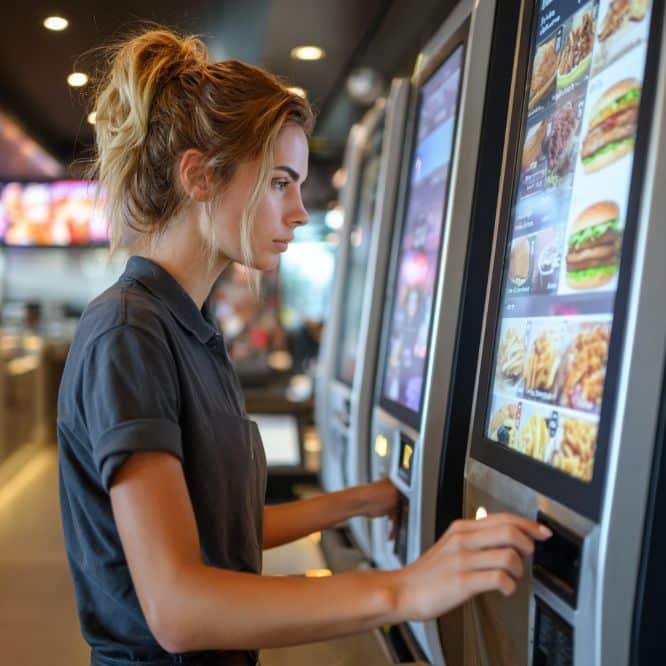
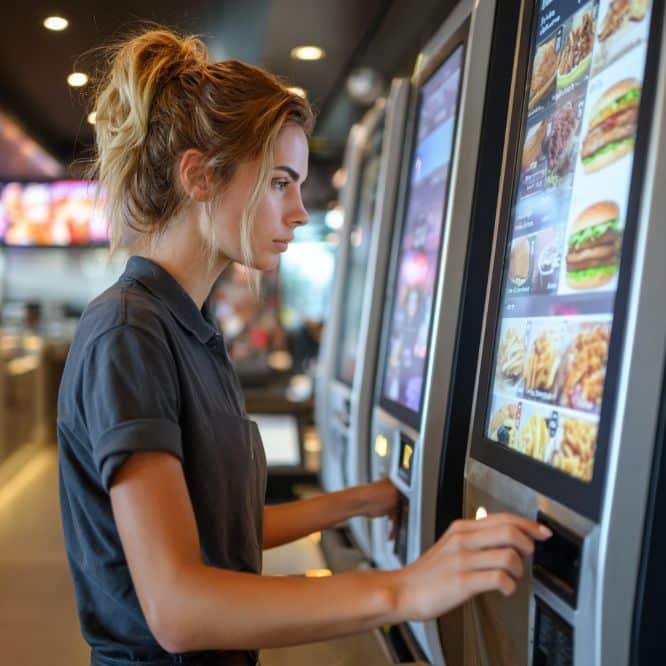
So things have changed in that respect. But that quiet shift is happening everywhere. Whatever you do, odds are you’ll be asked to log in, scan a code, download an app, or agree to a set of terms written by someone who never imagined a human reading them. Even ordering food at Macdonalds (which we do so infrequently we don’t know how) you use a machine.
All these innovations are sold as improvements. Apps are convenient. Accounts are efficient. Subscriptions spread costs. Software enforces rules fairly. That’s the pitch.
But add it all together and something else is happening.
We’re quietly locking people out. And they – the Big End of town – are reducing their labour costs.
If you don’t have a smartphone, you’re already negotiating obstacles most people never notice. If your phone is old, flat, broken, or simply not with you, things get harder. If you’re not comfortable navigating apps, passwords, updates, and permissions, the world shrinks a little more every year. If you don’t want another account, another subscription, another digital trail, tough luck.
The assumption now is constant connectivity and constant compliance. The system doesn’t ask if that works for you.
And when something goes wrong, there’s no one to talk to. Ever tried to talk to somebody at Amazon? Even if you do get a Human – which is increasingly rare because AI handles the support calls – do they speak understandable English?
That’s the second quiet shift, the slow disappearance of human discretion. Once upon a time, you could explain. A ticket inspector might listen. A receptionist might bend a rule. A librarian might quietly help you work around a limitation. Human systems were imperfect, but they were flexible.
Software isn’t.
Rules enforced by code don’t care why you’re late, why your card failed, why the system didn’t load, or why the app wouldn’t open. The answer is simply no. Not because someone decided it, but because the system says so. There’s no appeal process for a dropped connection.
We’ve traded discretion for consistency, and we’re discovering the cost.
Then there’s public space, or what used to be public space.
Parks, libraries, transport hubs, shopping precincts, even footpaths are increasingly monitored, managed, and conditional. Cameras are everywhere. Rules are posted everywhere. Behaviour nudged, discouraged, or penalised in subtle ways. Sit too long. Stand in the wrong place. Look like you don’t belong. You’re suddenly very visible.
Public doesn’t mean free anymore. It means supervised. For example, the big hardware store Bunnings has won a court case to allow it to use facial recognition technology in its stores to reduce shop lifting.
Again, none of this is framed as control. It’s framed as safety, efficiency, optimisation. And often, those goals are genuine. But the cumulative effect is a world where participation comes with conditions, and those conditions are enforced quietly, automatically, and without conversation.
What’s missing from all of this is not technology, it’s slack.
Room for error. Room for explanation. Room for people who don’t fit the assumed model of how a modern citizen behaves.
This isn’t a call to tear it all down. It’s just an observation. When systems become frictionless, they often become unforgiving. When access depends on the right device, the right account, the right behaviour, exclusion stops looking like exclusion. It just looks like “how things work now”.
And that’s the part worth noticing.
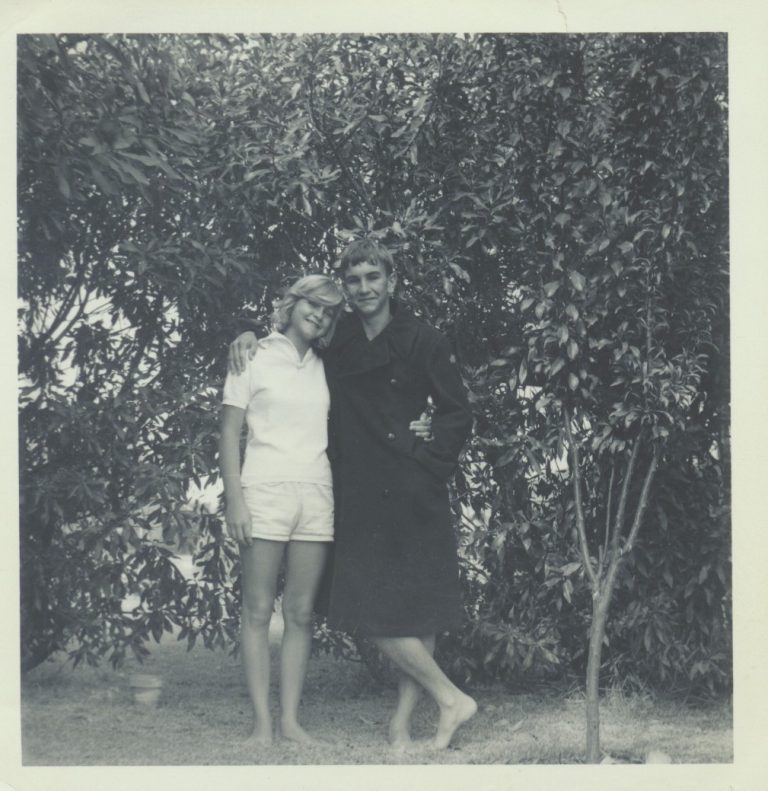
Here’s a photo taken with a camera. By me. In the distant past.