Macquarie Harbour, Hell’s Gates, and Sarah Island
Hell’s Gates
Macquarie Harbour in Tasmania is a vast, shallow fjord, roughly 33 km long by 9 km wide. It is around six times the size of Sydney Harbour, making it Australia’s second-largest natural harbor. The largest is Melbourne’s Port Phillip Bay.
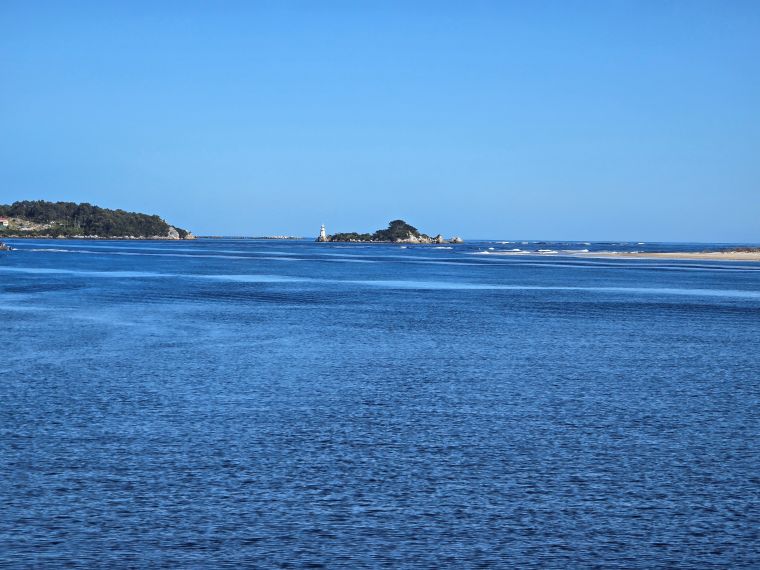
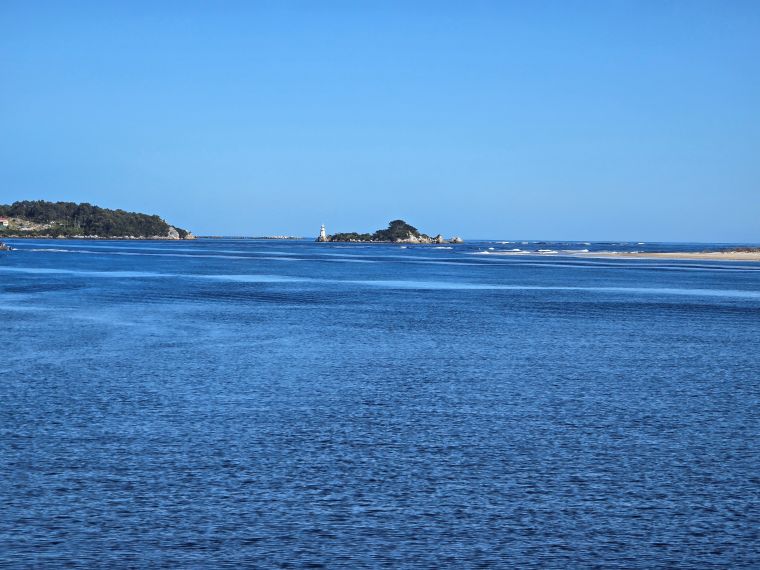
Cruising across Macquarie Harbour in Harbour Master 2 on a rare glorious day, warm and bright with almost no wind, you could forget you were headed for a place once called hell on earth. The water gleamed, the rugged coastline looked like a painting, and Hells Gates looked like a postcard.
Hells Gates is one of Tasmania’s most infamous landmarks. The narrow, shallow and often wild entrance between Macquarie Heads and Entrance Island opens into the huge harbour beyond. It earned its name from the early convicts who were shipped here in the 1800s, battered by surf and swell and thinking they were literally sailing into hell itself before even setting foot on Sarah Island’s penal settlement. The channel’s fierce tides, hidden sandbanks and tricky currents made it one of the most dangerous passages on the west coast, with ships often wrecked and many lives lost long before the horrors of the settlement were tasted.
One of the best-known wrecks is the steamship Kawatiri, which in 1907 was driven onto the North Spit near Hells Gates by heavy seas, breaking up and drowning several people as locals tried to salvage her mail and cargo. Other smaller craft and coastal traders also foundered on the shifting bars and rocks around the Heads before dredging and lighthouses eased navigation. For more on the deadly history of Hells Gates and shipwrecks in the area see the Hells Gates page on Wikipedia. Hells Gates (Tasmania) — Wikipedia (shipwrecks mention)

Sarah Island
When we stepped ashore at Sarah Island on a guided walk, the guide didn’t sugar-coat it: for the first convicts and guards it was misery, misery and more misery. The windswept isolation, relentless rain and brutal discipline made it one of the harshest penal settlements in Australia. Yet out of that hardship came skilled shipbuilding; timber from the forests and the sweat of unwilling hands turned Sarah Island into a surprisingly prosperous yard that launched vessels into the harbour.
By the late 1820s the convict outpost on Sarah Island was still grim, but its purpose was shifting from pure punishment to something more productive. The discovery of the prized Huon pine along the Gordon and King rivers made the island a strategic spot for building boats, and that drew in skilled craftsmen. An American-trained master shipwright named David Hoy arrived to oversee construction of vessels from the fine timber. Under his supervision the settlement produced more than a hundred ships. The work itself demanded skills the convicts could take pride in, rather than just hauling logs and enduring lashings. To keep that skilled workforce productive, officers struck informal bargains with some of the men, offering somewhat better treatment, access to tools and rewards like extra rations in exchange for their shipwright labour. That didn’t erase the hard conditions or the harsh history, but it did create a rare pocket of relative humanity in what was otherwise one of Australia’s toughest penal stations, turning convicts into tradesmen and the island into one of the colonies’ busiest shipyards. Here’s more on that story.
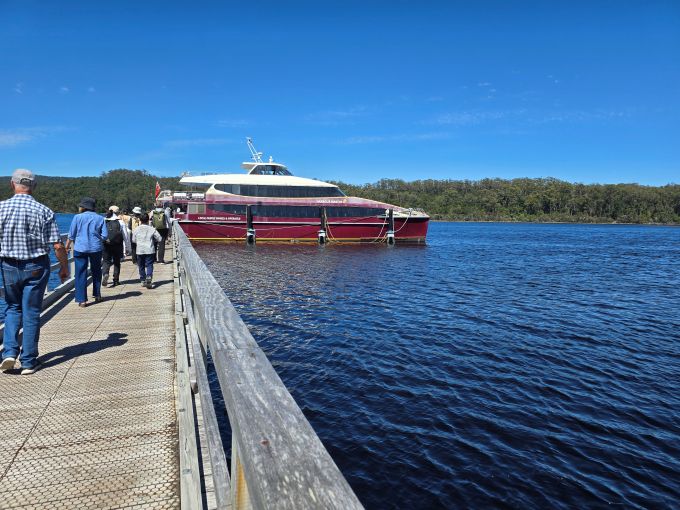
Back on the big catamaran, gliding up the Gordon River, the story shifted from convicts to the piners, the hardy souls who spent months in wet rainforest yanking Huon Pines from the slopes, floating them downriver and back to Strahan where the prized timber was used to build boats, homes, and fine furniture. We had window seats for the whole trip and we were served lunch – a wonderful Bento box full of goodies.

Gordon River
Long before tourists drifted up the Gordon River in comfort, the piners were out here fighting mud, leeches and rain that never seemed to stop. These men hacked their way deep into the rainforest to find Huon pine, prized for timber that never rotted and smelled faintly of spice. They lived in tiny rough huts for months at a time, waist-deep in bogs, dragging massive logs out by hand or with bullocks before floating them down creeks and rivers back to Macquarie Harbour.
It was cold, wet, lonely work and it broke bodies, but Huon pine paid better than most bush jobs and built much of Strahan’s early wealth. As you glide past silent banks and mirror-still water today, it’s hard to imagine the curses, exhaustion and sheer stubborn grit that once echoed through this peaceful stretch of river.
I’m sure quite a few of us remember the 1980s when it was proposed to dam this river. It was the start of The Greens party in Australia, with protests headed by Dr. Bob Brown. Read all about it here.

Our big boat tied up at heritage landing so we could walk through the rainforest on a boardwalk from which we could at least see the conditions these men worked in.
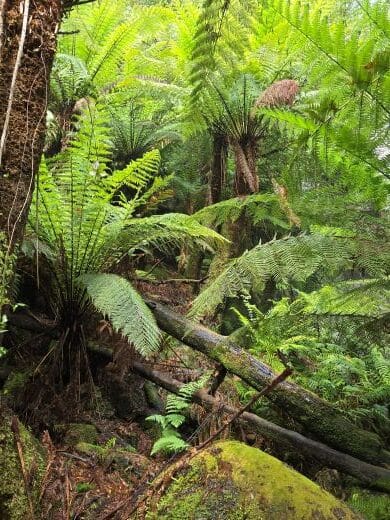
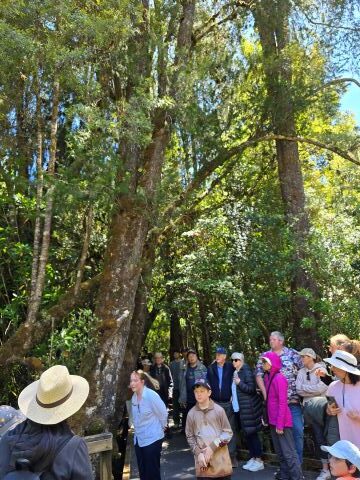
We were also shown a few Huon pines growing in their natural habitat. The Huon pine and the king billy pine both grow very slowly, estimated at 1 mm a year. The oldest trees are estimated to be 3,000 years old. Naturally, they are now protected.
Then it was back to the wharf at Strahan to board our coach for the drive up into the high country to Tasmania’s iconic Cradle Mountain.
After an excellent dinner at the Cradle Mountain Hotel our group gathered for an after dark (Tasmanian) devils feeding tour. Find out more about this experience here.
If you’d like to follow the whole trip, go here.