The Dawn That Changed Everything
It has been two years now. Two years since unspeakable horror poured over the Gaza-Israeli border. First, it was just the sound of rockets. Then the sirens. Then the chaos. The attacks started just before dawn when ordinary people were asleep in their beds.
Communities near the Gaza border—small kibbutzim where people lived ordinary lives—were torn apart as hundreds of Hamas gunmen poured across the frontier. They came on hang gliders and motorbikes and in pickup trucks, breaking through fences, firing at anything that moved. Families barricaded themselves in safe rooms. Mothers hushed their children as gunfire echoed through their homes. Entire communities were overrun within minutes.
By the end of that day, around 1,200 Israelis were dead, and more than 250 people had been dragged into Gaza as hostages. It was the deadliest day in Israel’s history. Civilians were hunted in their own homes. Raped, tortured, burned alive.
But there were heroes.
Inbal Rabin-Lieberman, a 25-year-old woman from Kibbutz Nir Am, lived just over a kilometre from the Gaza fence. At 6:30 that morning, she heard sounds that didn’t fit—drones, engines, gunfire. She didn’t wait for instructions. She knew something was wrong.
When the power failed, she ordered the electrician not to start the generator. That small act, keeping the kibbutz in darkness, prevented attackers from using the lights as a guide. Then she sprinted door to door, waking residents, distributing weapons from the kibbutz armoury, and assigning the 12-member standby squad to defensive positions.
When dozens of militants reached Nir Am’s perimeter, they met an organised, armed defence. For hours, Inbal and her team held them off until the army arrived.
Not one resident of Nir Am was killed that day.
It’s a staggering thought—surrounded by death and chaos, her courage and quick thinking saved an entire community.
Inbal has since been hailed as a hero, but she insists she wasn’t alone. She says she did her job and the people around her did theirs. Still, her story shines because it cuts through the noise.
While so many were taken by surprise, she recognised the danger and acted. She didn’t freeze. She didn’t wait for someone else. She made decisions that meant the difference between life and death.
Amid the grief and anger that followed October 7, her story is a rare spark of humanity and resilience.
It’s easy, two years later, to forget how that day began—people waking up, making coffee, opening their shutters to the sunrise. It’s easy to talk about geopolitics, policy, retaliation, negotiations. But before all that, before the words and the noise, there were ordinary people who faced unthinkable terror.
We shouldn’t let anyone minimise that.
We shouldn’t let the memory fade into statistics.
Many people since that day have tried to downplay what happened, to blur it into politics. Perhaps the most despicable reaction in this country was the gleeful celebrations at the Sydney Opera house just 2 days after the massacre, egged on by the mullahs. At the Sydney rally, the ABC reported that Sheikh Ibrahim Dadoun told the crowd the attacks on Israel are an act of resistance. “I’m smiling and I’m happy,” he said. “I’m elated, it’s a day of courage, it’s a day of pride, it’s a day of victory. This is the day we’ve been waiting for.”
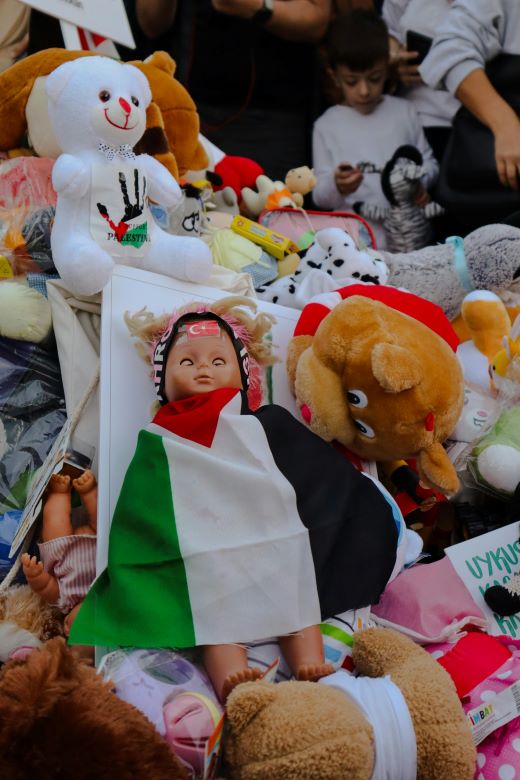
The Opera House sails were lit with the Israeli flag as a mark of respect. In response, “hundreds of protesters waved Palestinian flags and chanted slogans like “f… the Jews”, “free Palestine” and “shame Israel”. The police advised the Jewish community not to attend the protest. Note that this was well before Israeli troops entered Gaza. Had that protest been shut down emphatically, I think we would not have seen the escalation of antisemitism in this country.
Protestors march in the streets of Sydney and Melbourne every weekend carrying Palestinian flags or draped in keffiyeh, chanting ‘from the river to the sea’. I suspect many of them don’t know the name of the river, couldn’t point to Gaza on a map, know nothing of the history of the place that was called Judea before the Romans called it Palestine. They believe Hamas’s rhetoric. Increasingly, the massacre is being brushed aside. It won’t be long, just like the Holocaust, before some say it never happened.
It did, folks, and that fact must not be forgotten.
Having said all that, I hope that Trump’s just-announced peace plan does actually work. But I have no trust in Hamas. None at all.