Back on the Humpback Highway
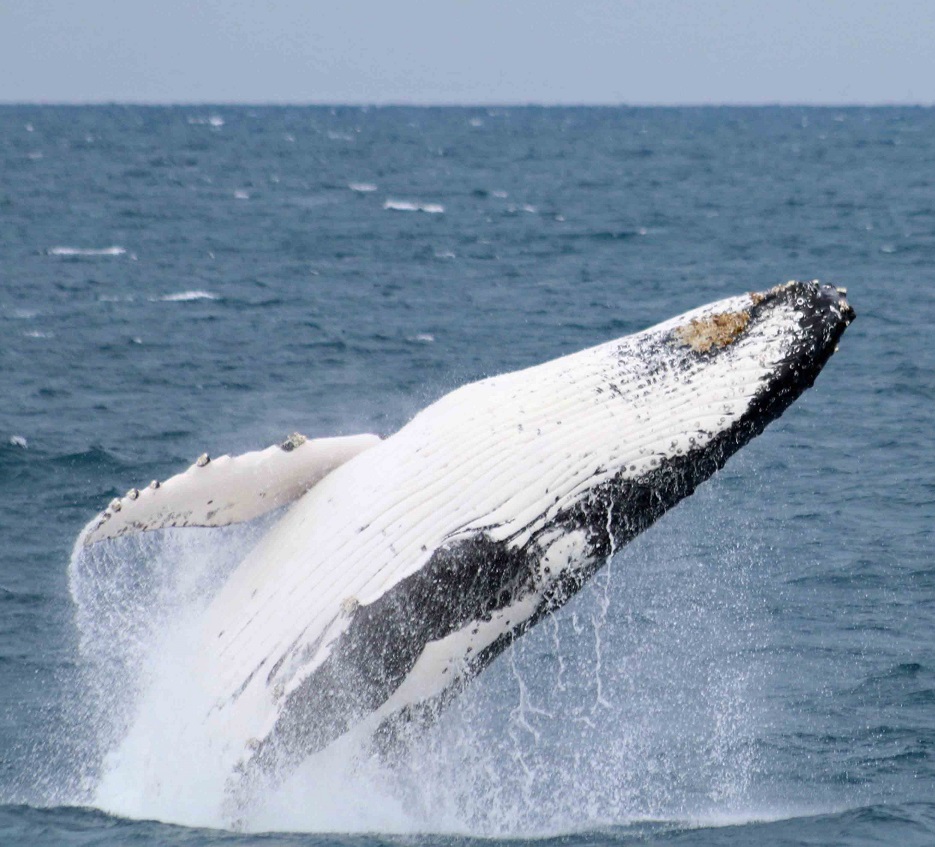
Tomorrow I’m going whale watching with friends.
That might not sound especially momentous. I live in Hervey Bay, one of the best places in the world to see humpback whales, and I’ve been going out to meet them for years. Some seasons I’ve even managed two trips.
But I didn’t go last year, and that felt wrong. Whale watching has become part of my calendar, along with Christmas, birthdays and complaining about summer humidity.
So tomorrow I’ll be back out on the bay, hoping the weather behaves and the whales feel sociable.
The Humpback Highway
Every year, humpback whales travel thousands of kilometres from their feeding grounds around Antarctica to the warm tropical waters off northern Australia.
They swim north along both sides of the continent, although the whales using the west coast belong to a different population. The east coast migration has become known as the Humpback Highway. The whales head north to mate and give birth. Then they turn around and make the long journey south to the rich krill grounds of Antarctica.
It is an extraordinary migration, made even more remarkable by the fact that the eastern Australian humpbacks came very close to disappearing altogether. Commercial whaling reduced the population from an estimated 30,000 animals to around 150 by the early 1960s. Humpback whaling in the Southern Hemisphere was banned in 1963.
The recovery since then has been astonishing.
A recent estimate put the eastern Australian population at more than 50,000 whales, possibly as many as 60,000. That is not simply a recovery from the edge of extinction. It may be more whales than there were before commercial whaling began.
You can read more about that remarkable comeback here. Eastern Australian humpback whale population now well above pre-whaling levels.
Not every whale comes into Hervey Bay, of course. Many continue along the coast with places to go and whales to see. But a substantial number leave the highway and divert into the sheltered waters of Platypus Bay, between K’gari and the mainland. They might stay for a few hours or several days, resting, socialising and generally mooching around before continuing south.
That’s what makes whale watching here different.
In many places, people watch whales passing on their migration. In Hervey Bay, the whales come to visit. Teenagers, mothers and hopeful males. The whale-watching season changes as the migration progresses.
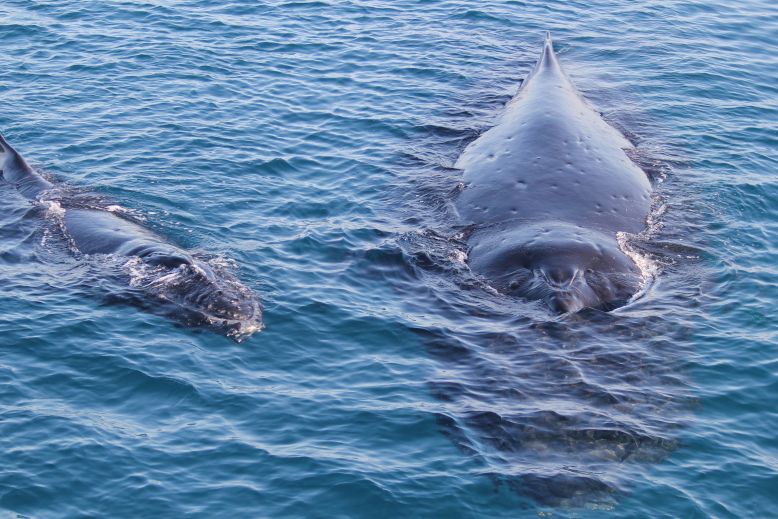
The first visitors are usually juveniles, last year’s youngsters that are not yet sexually mature. They don’t have pregnant females’ pressing appointments further north, so they have time to play.
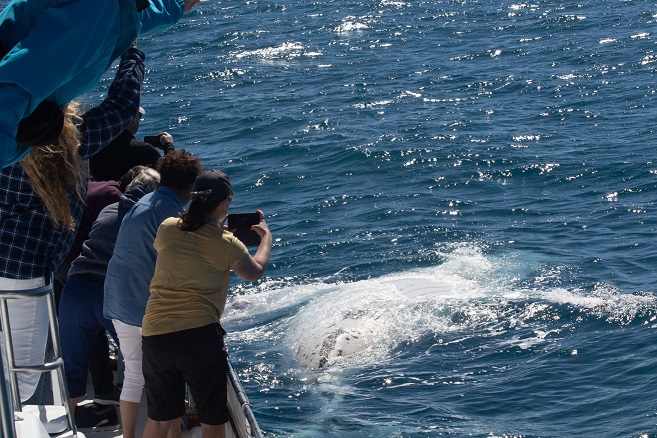
Humpbacks are usually solitary, but the migration gives the youngsters an opportunity to meet others. They form loose groups, chase each other and investigate boats.
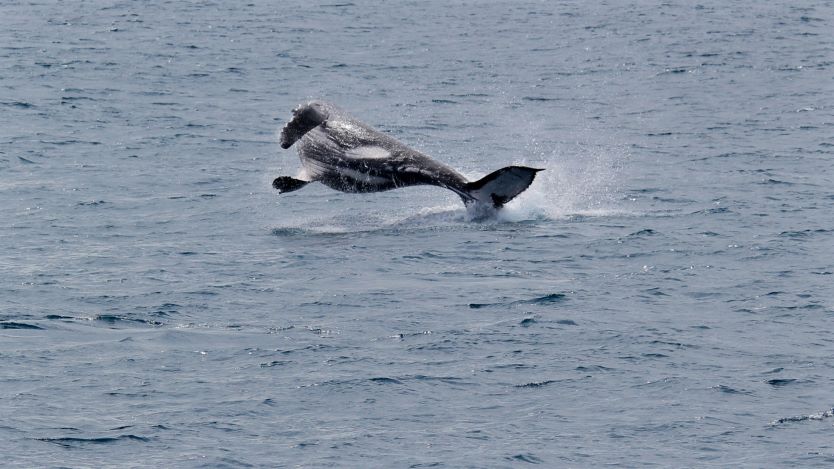
Later in the season, the mothers arrive with their calves. The sheltered bay gives the babies time to feed and build the layer of blubber they will need in Antarctic waters. Between feeds, the calves practise being whales. They breach, slap their tails and wave their long pectoral fins, sometimes with more enthusiasm than skill.
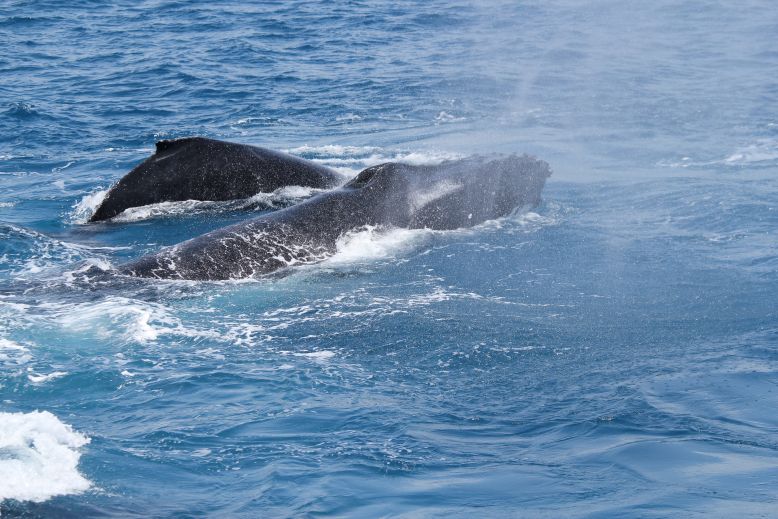
Then there are the mature males, following the females and competing for their attention. A fighting pod is not subtle. Several enormous animals charge, shove, thrash and blow around one female, churning the water into foam.
I’ve seen all these things over the years. But the spectacular behaviour isn’t my favourite part.
Meeting the locals
I like it best when the whales decide to investigate the boat. There are rules about how close whale-watching boats may approach. The skipper cannot chase or harass the animals. If a whale comes close, the engine is put into neutral or shut down. The whale makes the choice.
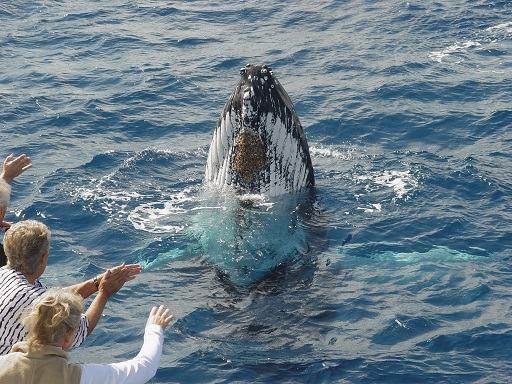
Sometimes they swim alongside the boat or pass underneath the hull. They roll over and stare up through the water, or spyhop, holding themselves vertically with their heads above the surface so they can inspect the people.
The people wave and call out, hoping to attract their attention. We’re told the whales can see and hear very well both above and below the water, and their behaviour suggests that they can. They are watching us as closely as we are watching them.
If a whale comes close and refuses to leave, the boat has been “mugged”. It cannot move until the whale loses interest. On one memorable trip, our boat was mugged three times. One solitary female stayed for more than an hour, circling the boat and inspecting it from bow to stern. She rolled over to look at us, blew bubbles, snorted and sprayed everyone with whale breath. Those of us holding cameras had to wipe whale snot off our lenses.
It was wonderful.
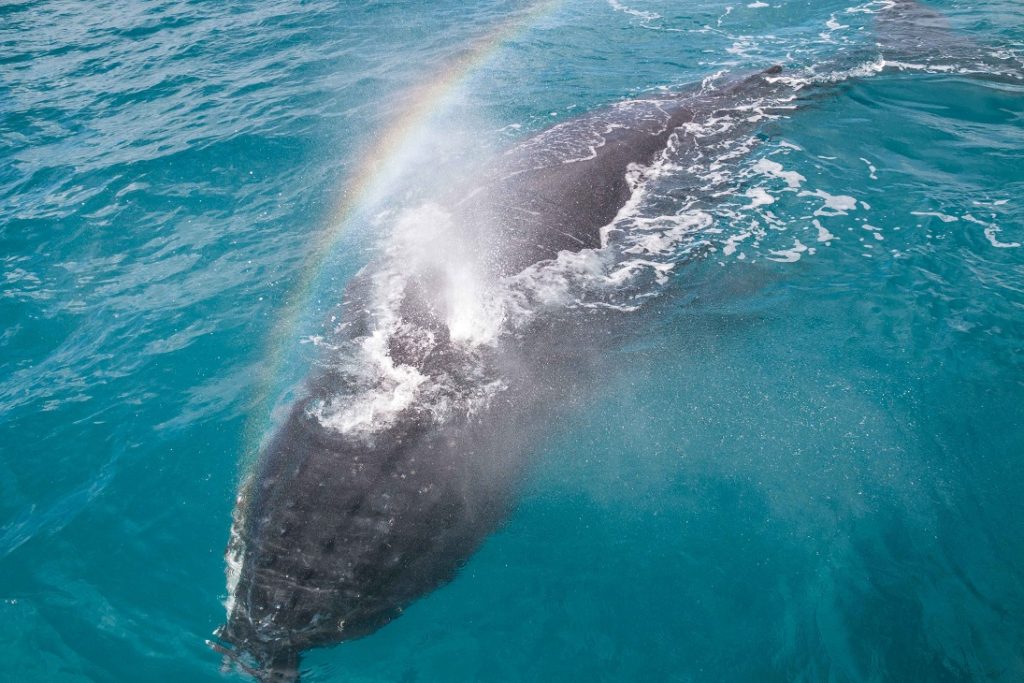
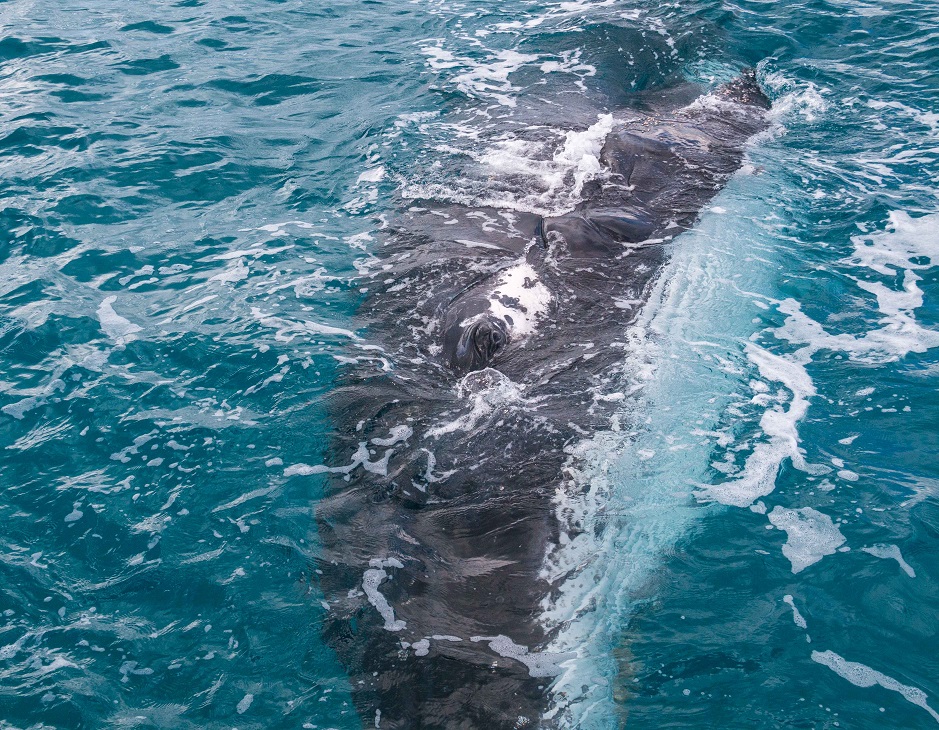
On another trip, a pair of curious juveniles transformed an otherwise fairly ordinary day. We had travelled almost to Rooney Point, where Hervey Bay meets the Coral Sea, before we found them. They swam beneath the boat, rolled alongside us and rose to look at the people. Those last fifteen minutes changed the whole trip.
The whales don’t perform to a timetable Every whale-watching trip is different. I’ve been out on calm, sparkling days when the whales did very little. I’ve been out when the bay was lumpy enough to send passengers reaching for sick bags, and the whales breached over and over again.
I’ve watched calves practising their moves, courting couples rolling around together, fighting pods throwing their weight about and juveniles drifting on their backs while lazily slapping the water with their pectoral fins.
I’ve seen whales and dolphins playing together. I’ve watched a mother bring her calf close to a boat. I’ve looked down into a whale’s open eye as it looked back at me.
I’ve also missed breaches because they happened on the other side of the boat, arrived just after the action stopped and taken many excellent photographs of enormous splashes where a whale used to be.
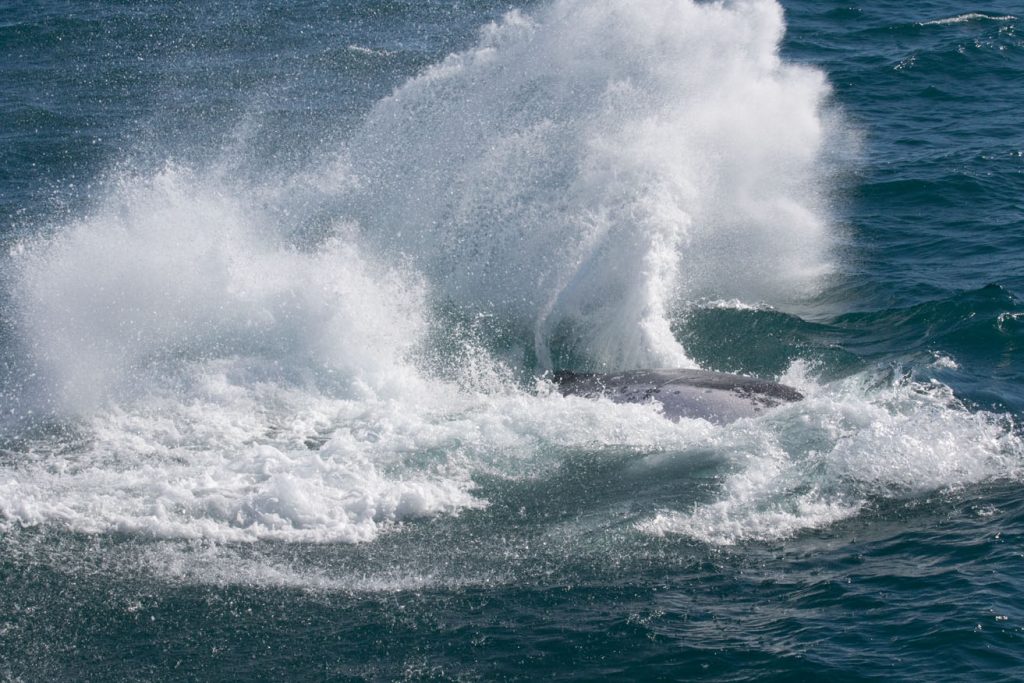
Then there were the photographic disasters.
One year, I used the wrong shutter speed and ended up deleting most of the blurred, out of focus disasters. On another trip, my lens refused to communicate with the camera. In 2023, rough water and a waterproof coat somehow helped change my camera settings, turning most of my eagerly anticipated photographs into artistic blurs.
Fortunately, I still saw everything.
That’s the point, really.
A photograph is wonderful, especially when it captures a whale’s eye or the unique markings beneath its tail. But the real experience is being there when an animal the size of a bus chooses to come closer and take a look at you.
Tomorrow we’ll head out into Platypus Bay and see who is around.
Perhaps we’ll see breaches, tail slaps and energetic young whales showing off. Perhaps a curious humpback will come over to inspect the strange little creatures calling and waving from the boat.
Or perhaps we’ll see dark backs, distant blows and a few tails disappearing beneath the surface.
The whales decide. That’s what makes every trip special.
I’ll let you know what happened next week.
Oh, by the way, if you’re interested in my side hustle, writing books, you might like to take a look at the games I’ve created, based on the books. They’re short and free to play.
Once a programmer software engineer always a programmer software engineer.