The abbey at Cluny
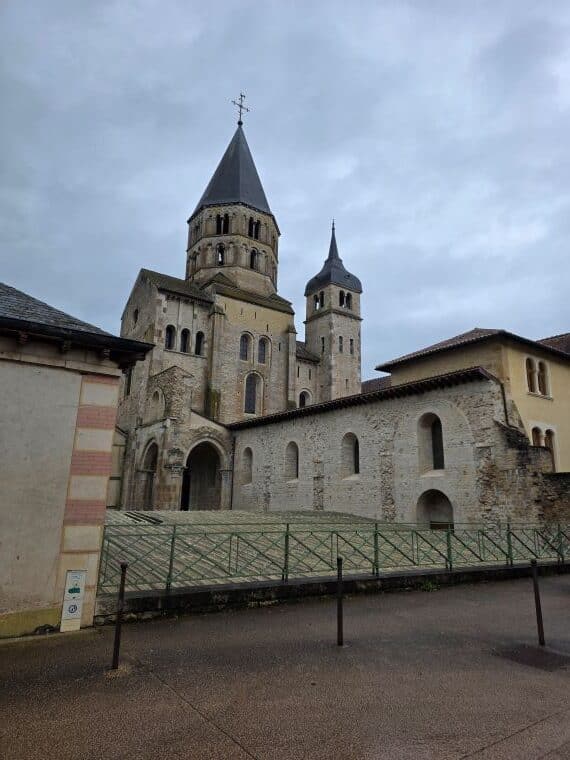
On a day of low cloud, drizzle, and biting cold we headed off on a coach to visit the famous Cluny Abbey, once one of the most powerful institutions in Europe.
I remembered Cluny from my medieval history studies at university, half a century ago. I was expecting something along the lines of Melk Abbey in Austria, all gold, frescoes, and sweeping architecture.
Wrong.
This is France, and the French Revolution did not treat religious institutions kindly. Most of the abbey is gone. Anything valuable, decorative, or symbolic was stripped out long ago. What remains is a fragment of something that was once vast and powerful.
And it really was powerful.
“The town grew up around the Benedictine Abbey of Cluny, founded by Duke William I of Aquitaine in 910. The height of Cluniac influence was from the second half of the 10th century through the early 12th. The abbey was sacked by the Huguenots in 1562, and many of its valuable manuscripts were destroyed or removed. Part of the abbey church and monastic buildings survived destruction as a result of the French Revolution.”
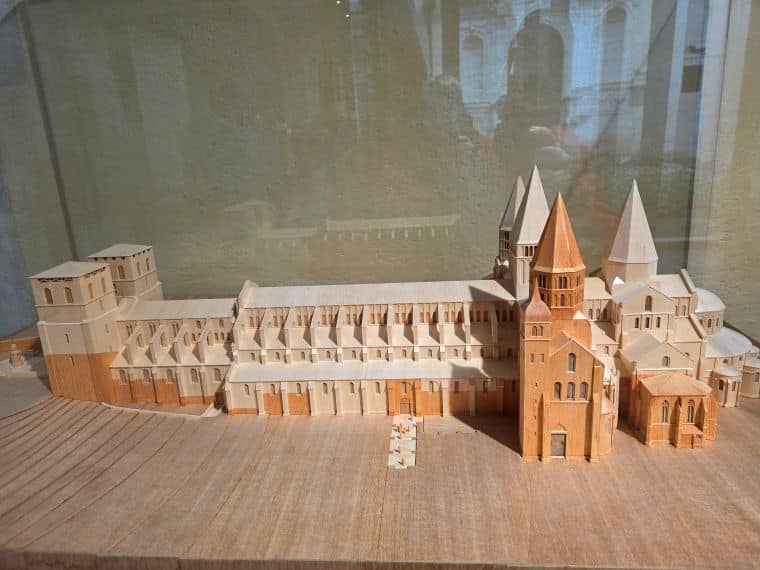
At its height, Cluny was one of the most influential religious centres in Europe. The abbey controlled a network of hundreds of monasteries across the continent. Its abbots answered directly to the Pope, not to local lords, which gave them enormous independence and authority. For a time, Cluny’s influence rivalled that of Rome itself. Kings and nobles sought its favour, and its reforms shaped the medieval Church.
For me, we hit a hurdle before we even got off the bus.
Cluny is known for equestrian activities, breeding, and all things horse. I didn’t know that. On this particular day, they were hosting an international show jumping competition. That meant horses, floats, and a generous amount of manure everywhere.
Unfortunately, we had to pass the competition fields to reach the abbey.
Most people would shrug and walk through. I can’t. I’m extremely allergic to horses. My lungs don’t negotiate, they just shut things down. So I wore a mask and pushed on, trying not to think too hard about what was in the air.
Our guide walked us through the history of the Cluniac monks and helped us picture what once stood there. The scale must have been extraordinary. Today, the French approach is not to rebuild or beautify, but to preserve what survives. The destruction is part of the story, and they leave it visible.

We were told that imagery was much more important then than it is now, since most people couldn’t read or write. Statues were representations of people and were considered to be alive. Statues were destroyed (ie killed) by decapitation (the French are good at that) or just by destroying the nose. If you can’t breathe, you die.
These days, the site has a new life. A prestigious maths and physics school occupies part of it. The students have their own traditions, including decorating their lab coats to mark their year. A splash of colour and personality in a place shaped by centuries of change.
From powerful abbey to revolutionary ruin to modern science. Cluny has seen a bit of everything.
If you enjoyed this article you might enjoy my books. My science fiction romance book The Iron Admiral: Conspiracy is free if you sign up for my newsletter. It’s fast-paced action all the way as star-crossed lovers race to stop a holocaust.
If you’ve missed any of the posts for this trip, go here. Europe 2026