Novi Sad, Serbia
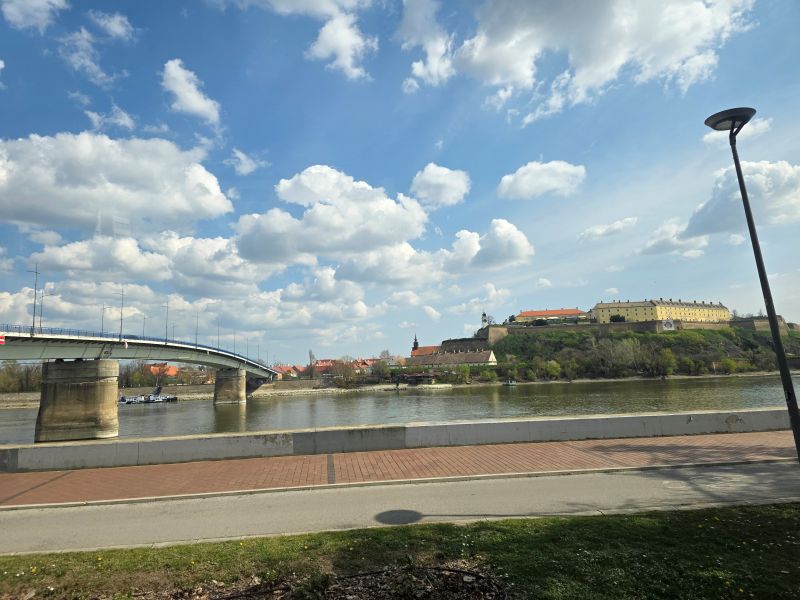
Petrovaradin Fortress
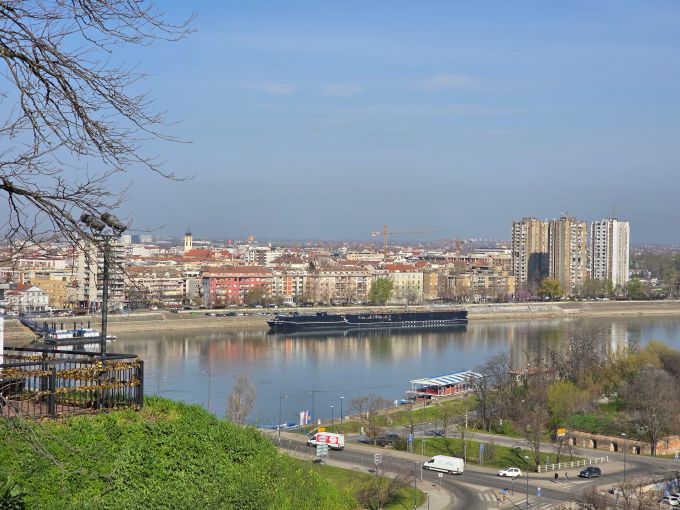
Novi Sad turned out to be a tale of two experiences. The much-touted Petrovaradin Fortress sounded impressive on paper, and its history is rich, but in practice it was a slow climb up a steep cobbled slope to… a view. A good view, yes, stretching across the Danube, but you work for it. For those of us no longer in our mountain-goat phase, it felt less like a grand military site and more like a lesson in persistence. The guide filled in the centuries of history, which helped, but without that, it’s just a lot of stone and a long way up. And an equally long way down again.
From up there we could see Ostara at her quay. The long black ship doesn’t look much like the floating hotel she really is. It’s like she’s disguised as a barge.
We stopped at an openair restaurant with lots of tables and chairs where we had morning tea – that turned out to be a cold cappuccino, most of which was froth, in a paper cup.
Novi Sad city
The mood lifted the moment we reached Novi Sad itself. The city is genuinely charming, with elegant 18th and 19th century buildings lining open squares. The wide pedestrian mall is lined with restaurants and outdoor tables, inviting people to sit and enjoy the lovely weather with coffee or a meal. Unlike the rest of the country I didn’t see the decay we noticed elsewhere. That said, we only saw the city centre. After our long walk up and down the hill we were content to sit on a bench and do some people watching: the two orthodox priests in their flowing black robes, the many delivery people on their bicycles, the balloon sellers, and the little kids wearing hi-viz vests walking along holding a rope held by two teachers at the back and front of the line.
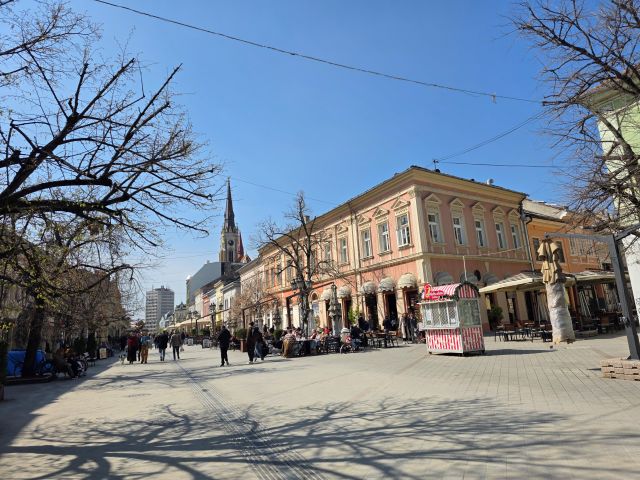
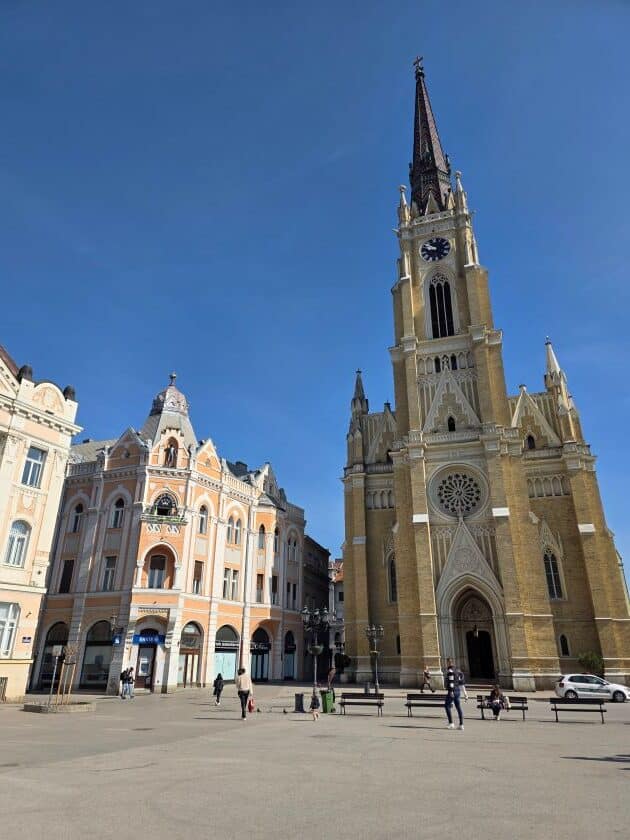
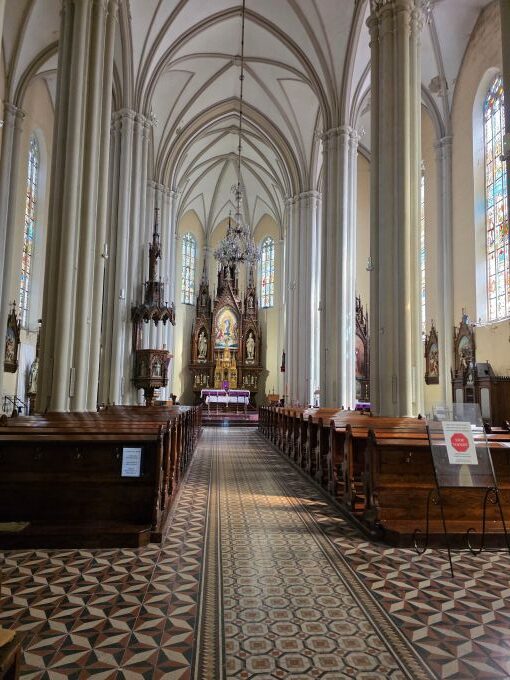
The standout building in the city is the Catholic Church of the Name of Mary, its 72 metre bell tower dominating the skyline. We could only peer inside through locked gates, which was frustrating, but even that glimpse hinted at something special. What really defines Novi Sad, though, is its mix of cultures. Within a short walk you’ll find Catholic, Orthodox, and Protestant churches, along with a synagogue, all part of the city’s long tradition of diversity and tolerance.
That openness makes one darker chapter hit harder. During the Second World War, in January 1942, Hungarian occupying forces carried out a brutal raid in Novi Sad. Over three days, soldiers rounded up civilians, mainly Jews and Serbs, and executed them on the frozen Danube. Holes were cut into the ice, and entire families were shot and pushed into the river. Today, a memorial called “The Family” stands on the riverbank. It’s simple and deeply moving, a group of bronze figures facing the water, marking the place where so many lives ended. It’s a reminder that beneath the beauty and the easy charm, this city has known real suffering.
So yes, the fortress might be a bit of a slog, but Novi Sad itself is well worth the visit. It’s a place with heart, history, and just enough shadow to give it depth.
Lunch made up for it, though. The crew did a barbecue, offering sausages of various type, cevapcici, frenched lamb chops, prawns, fish, and hamburgers, all with the expected salads and baked potatoes.
One thing you’ll never do on a river cruise is starve.
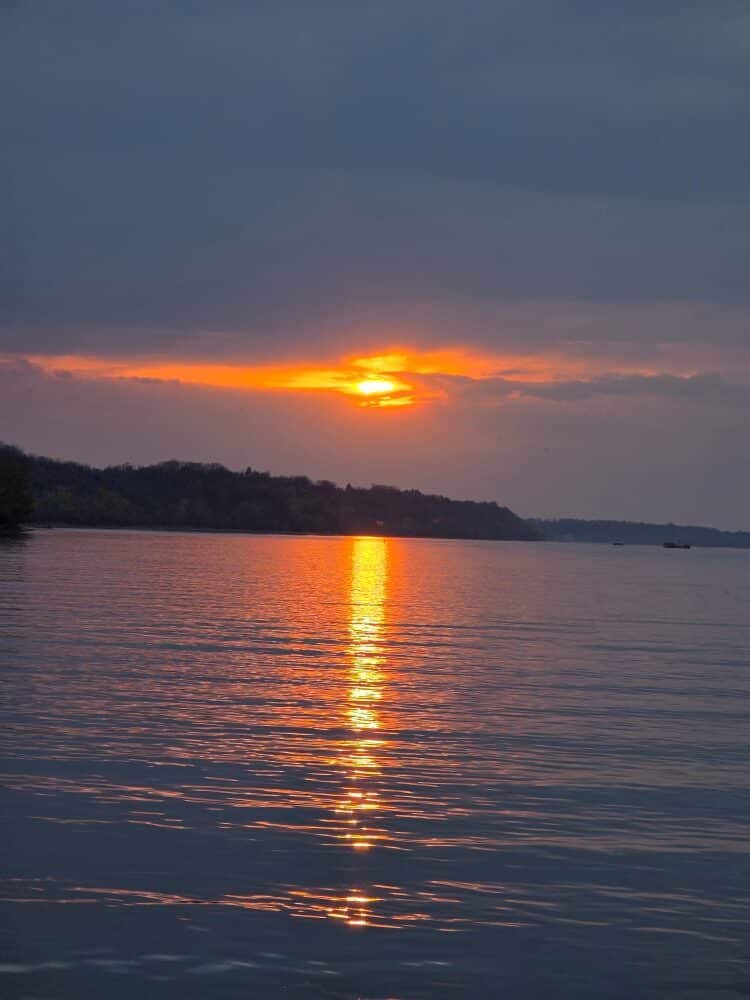
As we sailed away, we were treated to a spectacular sunset.
If you enjoyed this article you might enjoy my books. My science fiction romance book The Iron Admiral: Conspiracy is free if you sign up for my newsletter. It’s fast-paced action all the way as star-crossed lovers race to stop a holocaust.
If you’ve missed any of the posts for this trip, go here. Europe 2026