Bucharest : Ceaușescu’s Palace and a City of Contrasts
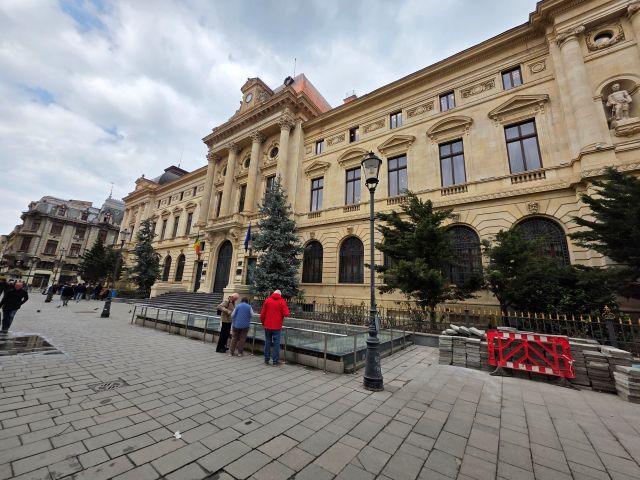
Bucharest is often called the Paris of the Balkans, and you can see why. Wide boulevards, elegant facades, and flashes of faded grandeur hint at a past that once aspired to match the great cities of Europe. In places, it still works. There are buildings here that make you stop, look up, and imagine a very different time.
Then the cracks start to show.
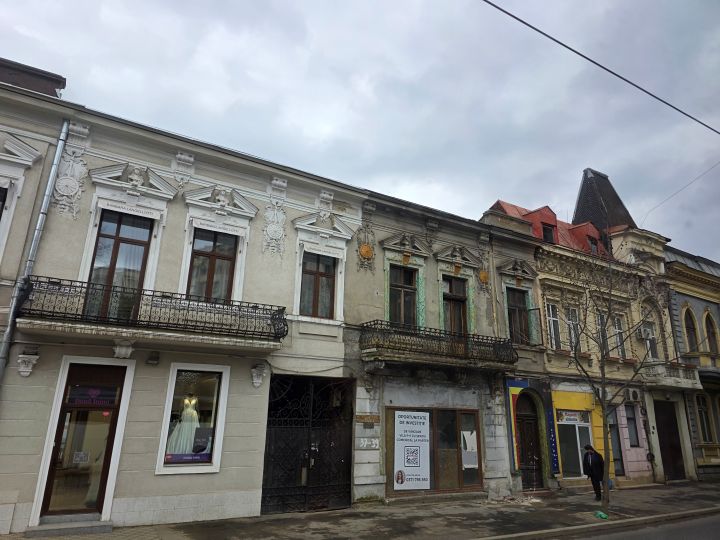
Between those grand streets are neighbourhoods that feel like they’ve been quietly left behind. Buildings sag, paint peels, and whole blocks seem caught in a slow decline. It isn’t dramatic ruin, it’s something more unsettling. A sense that things just… stopped.
The drive in from Giurgiu set the tone. Flat, open paddocks stretched out on either side of the road, but there was no life in them. No livestock, no movement, just empty land under a dull sky. It felt less like countryside and more like a pause button had been pressed.
We stopped at a roadside servo for a break, and behind it sat a building that summed it all up. Half-abandoned, half-forgotten, as if the people working there had simply walked away one day and never come back. It wasn’t dramatic enough to be a ruin, just quietly decaying, like so much else.
And then there’s the palace.
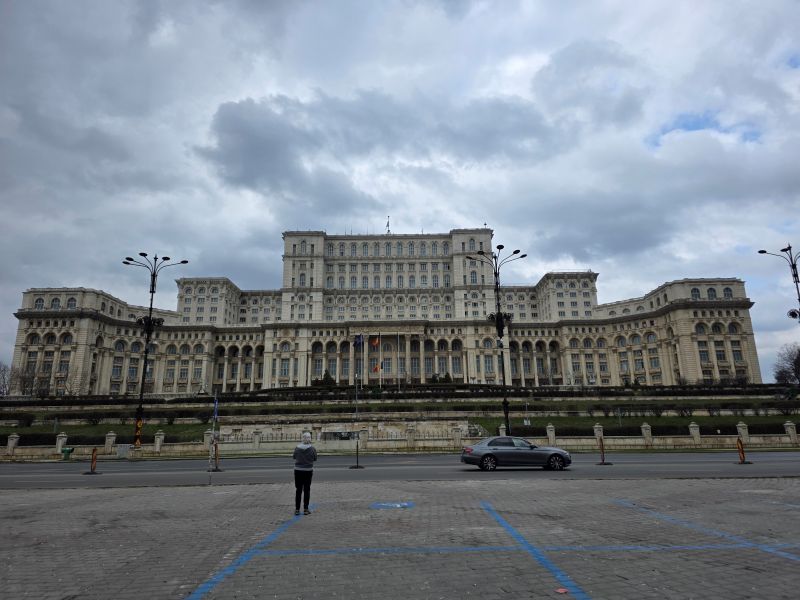
Nicolae Ceaușescu’s Palace of the Parliament dominates Bucharest in a way that feels almost unreal. It’s vast, heavy, and unapologetically excessive, a monument to power built while the country outside its walls struggled to survive. Entire neighbourhoods were flattened to make way for it, and the cost, both financial and human, was staggering.
It has around 3,000 rooms, and only about 9% of them are regularly used. The rest sit largely empty or are opened up for conferences and official events. It would be prohibitively expensive to demolish, so it remains, an unavoidable presence in the city.
Standing in front of it, you don’t admire it so much as absorb it. The scale is overwhelming, the symmetry almost oppressive. The only word that really fits is obscene.
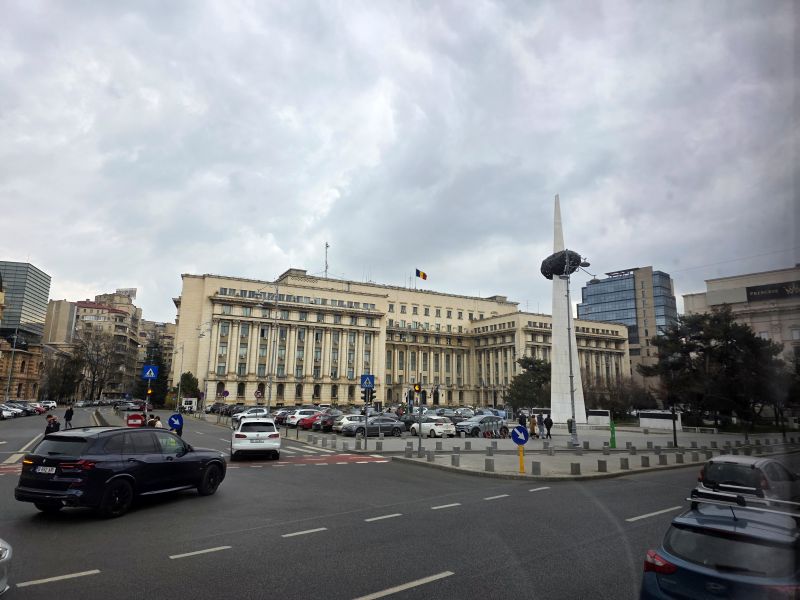
That same story plays out in Revolution Square.
Once known as Royal Square, it was renamed after the events of 1989 that brought Ceaușescu’s rule to an abrupt end. This was where his offices stood, where power was exercised, and where it finally unraveled. When the protests reached their peak, he fled by helicopter from the roof, a desperate escape that didn’t last long. He was captured soon after and executed, bringing a brutal chapter of Romania’s history to a sudden and violent close.
Standing there now, it’s hard to reconcile the calm of the present with what happened in that space. Like much of Bucharest, it carries its past in plain sight. The strange looking kebab affair is apparently a monument to the many people who died here when the military fired on their own people.
We did, however, find a different side of the city at lunch.
At Hanul lui Manuc, the mood shifted completely. Set around a traditional courtyard, it felt like stepping back into a more generous, more human version of the city. We sat down to a Romanian lunch and were soon treated to folk dancers in full regional costume, bright, energetic, and impossible not to smile at. After a morning of concrete and contradictions, it was a welcome reminder that culture here is very much alive.
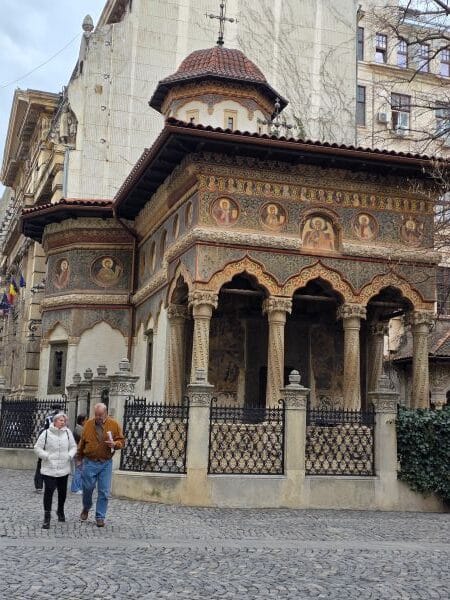
Not far away, we stepped into the oldest Orthodox church in the city. Inside, the light softened and the noise of Bucharest dropped away. The walls were covered in frescoes, rich with colour and history, telling their stories in that quiet, timeless way these churches do so well. It was a moment of stillness in a city that doesn’t offer many.
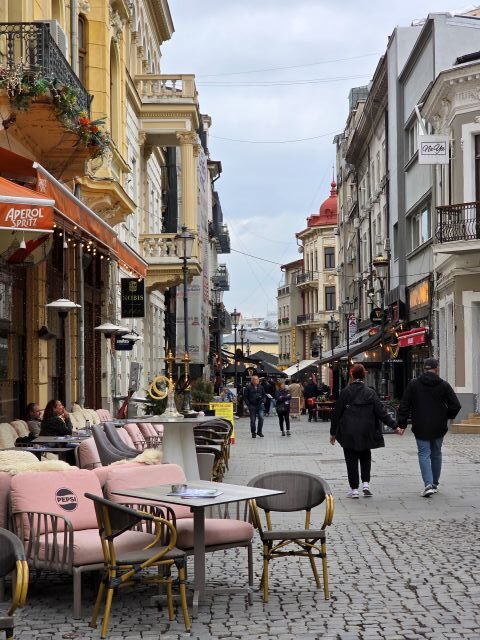
From there, we wandered through the cobbled streets of the Old Town. “Old” is doing a bit of heavy lifting, but the area has charm. Cafés, restored facades, and pockets of life sit side by side with buildings that haven’t quite made it back. Once again, that mix of faded splendour and slow decay was impossible to ignore.
Our final stop before heading back to the ship was a historic village museum, a collection of traditional houses and churches either relocated to the site or built in the old style. It showed how Romanians once lived, from rural homes to wooden churches, each one carefully preserved. After the weight of Bucharest, it felt grounded, human, and real. Not grand, not oppressive, just lived-in.

And then there was the traffic.
Getting out of Bucharest took over an hour. For a city of around two million people, it felt like every single one of them had decided to be on the road at the same time. Lanes blurred into suggestions, patience wore thin, and progress came in grudging metres rather than kilometres.
By the time we finally broke free and headed back towards the ship, Bucharest had left its mark. Not just for what it shows you, but for what it doesn’t quite hide.
If you enjoyed this article you might enjoy my books. My science fiction romance book The Iron Admiral: Conspiracy is free if you sign up for my newsletter. It’s fast-paced action all the way as star-crossed lovers race to stop a holocaust.
If you’ve missed any of the posts for this trip, go here. Europe 2026
When I visited Bucharest, I thought how ugly that palace building was. What did surprise me, however, was how modest by contrast his house was.
Apparently he was a shoemaker’s apprentice. Perhaps he wanted to show what a long way he’d come with that monstrosity. I heard it had a roof that opened so he could land his helicopter inside. Louis XIV eat yer heart out.