Belgrade
Belgrade is the capital of Serbia and it has many buildings dating back to the late 18th-early 19th century, But I wouldn’t want to drive there. I thought the roundabout at the Arc de Triomphe in Paris was chaotic. Watching the drivers going through intersections in Belgrade was crazy. In fact, we had a very nearly collision with a car. The bus won.
Our tour guide told us all about every building we passed, most of them government offices. I confess I turned off. The most interesting one was a ruined building that had been military HQ, very badly damaged in NATO raids but not rebuilt. The Balkan wars are never very far away.
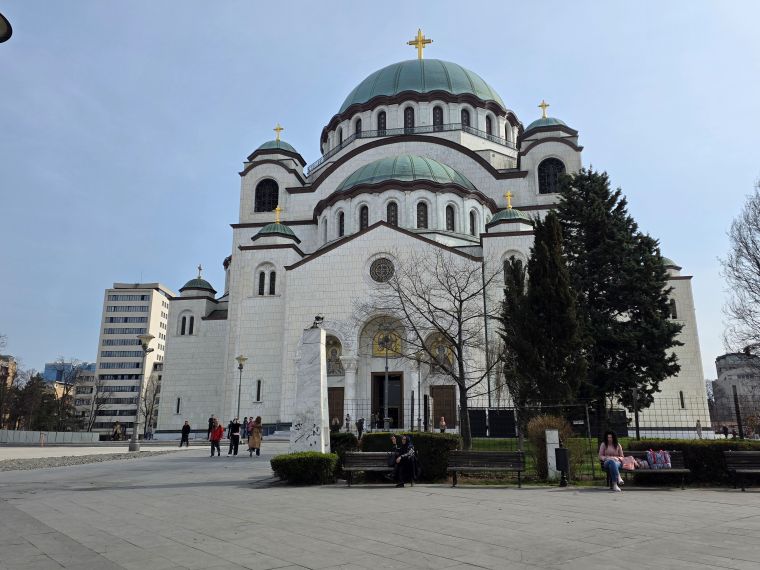
Our most important stop was at the Temple of Saint Sava, an enormous Orthodox cathedral. Built of white marble, it’s surprisingly modern, with most of the construction completed in the late 20th and early 21st centuries, yet it carries the weight and grandeur of centuries-old tradition.
What’s remarkable is how it was funded. Rather than being the project of a single ruler or institution, it was built largely through public donations, contributions from the Serbian Orthodox Church, and support from the state. Even the interior decoration, including the vast golden mosaics, has been financed in stages, with help from international partners, including significant Russian backing. The result is a cathedral that feels both deeply national and broadly Orthodox. I imagine the great church of Constantinople, Saint Sofia, would have looked very similar inside. There are no pews. It seems Orthodox Christians worship standing up which can be a bit hard when a service like Christmas can be 5 hours long.
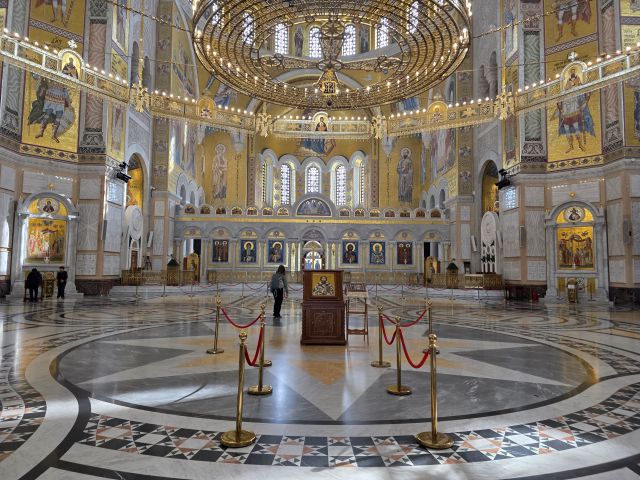
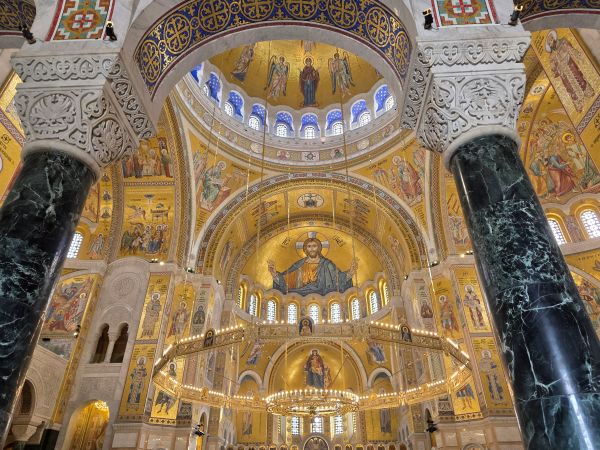
But while the cathedral itself is magnificent, the surrounds are broken and quite hazardous.

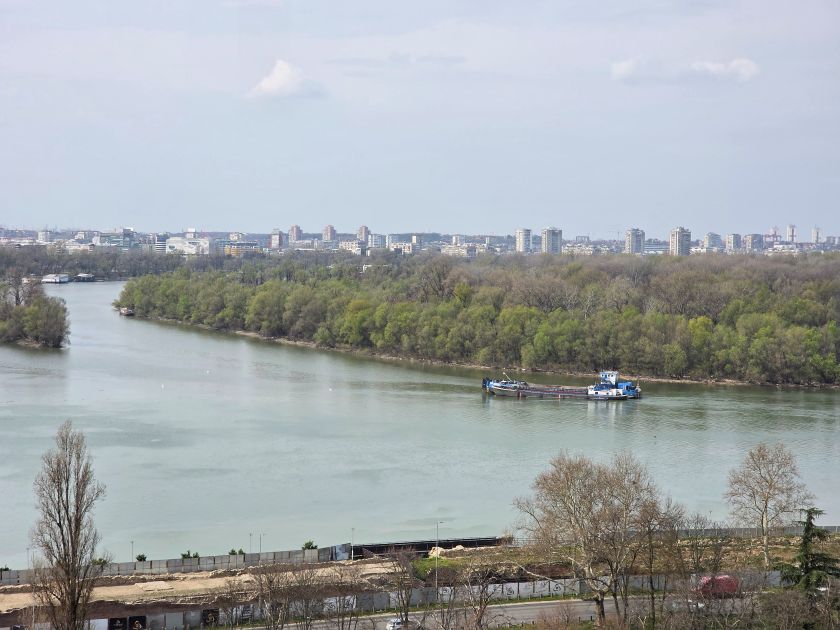
Then it was off to Belgrade’s fortress, Kalemegdan, which sits right at the meeting of the Danube and the Sava. It’s obvious why every empire wanted it. This was the gateway between Central Europe and the Balkans, so it changed hands more times than anyone could comfortably count. The Ottomans held it for long stretches from the 16th century, strengthening the walls and using it as a key military base, while the Habsburgs kept trying to take it back, leaving their own mark each time they succeeded. What you see today is a layered structure, Roman foundations, medieval Serbian walls, Ottoman additions, and later Austrian fortifications, all stacked into one strategic stronghold. Stand on the ramparts and it’s obvious, control this point, and you controlled the region.
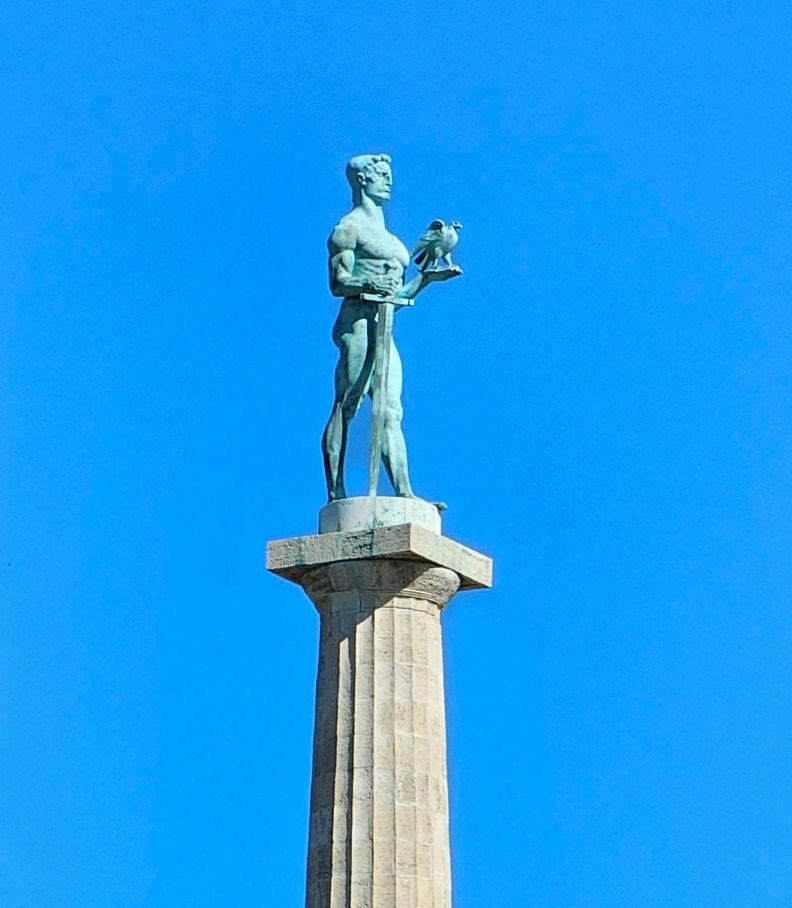
The Victory statue, known locally as Pobednik, is Belgrade’s unapologetic symbol of defiance, a bronze, naked male figure standing high above the rivers with a falcon in one hand and a sword in the other. Created by Ivan Meštrović to celebrate Serbia’s victories in the Balkan Wars and the First World War, it was originally intended for a prominent square in the city centre. That plan didn’t last. The idea of a nude male statue caused such an uproar at the time that authorities quietly relocated it to the Kalemegdan fortress instead, where it was unveiled in 1928. Perched on its tall column overlooking the confluence, it ended up in a far more powerful position than first planned, less a polite monument and more a bold statement watching over the city’s long, hard history.
That evening had its own tribulations for our ship. Serbia isn’t part of the EU and we had to take our passports on our shore visits. When we arrived at Belgrade, Serbian officials carried out passport control for everybody – staff and guests. Our tour director told us the crew were lined up and their passports checked. The Serbs wanted to do that for all passengers, too – at 1:30am. A few bottles from the ship’s stores persuaded the public officers it wasn’t necessary. (Corruption is alive and well in Serbia.)
When we left Belgrade the trip downstream kept many of us awake. The wind had picked up and whipped up white caps as well as bangs and crashes. The ship was hooting along and I reckon officialdom may have returned to the trough for another go, so the Ostara had to make up time.
If you enjoyed this article you might enjoy my books. My science fiction romance book The Iron Admiral: Conspiracy is free if you sign up for my newsletter. It’s fast-paced action all the way as star-crossed lovers race to stop a holocaust.
If you’ve missed any of the posts for this trip, go here. Europe 2026