Vukovar – a city scarred by war
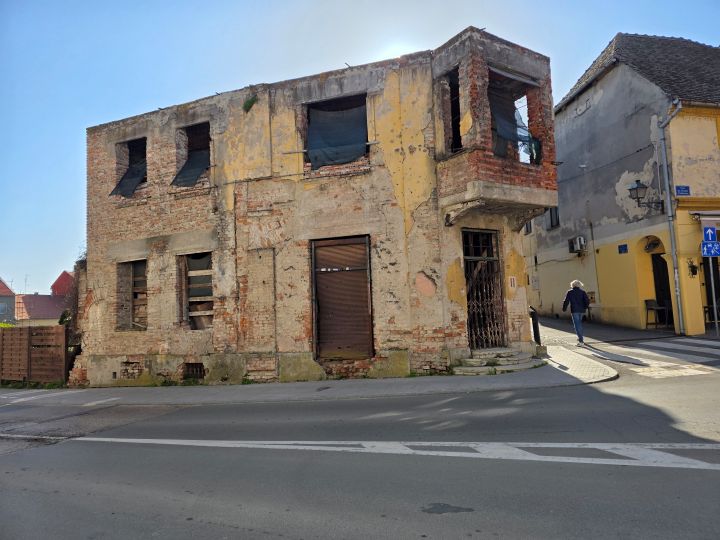
This morning our ship stopped at the Croatian town of Vukovar, a quiet settlement on the banks of the Danube. We elected to take a walking tour of the town. The first thing you notice is the water tower on the hill with its Croatian flag flying at the top. After that you notice buildings still showing signs of being in a war all these years later. Vukovar was liberated in 1995.
Because so much of the recent history of this town is about Croatia’s war of independence.
It looks peaceful today. Church towers rise above red roofs, cafés line the streets, and the river moves slowly past the town just as it has for centuries.
But Vukovar carries the weight of a very recent and very painful history. We were privileged to learn all about it from one of the town’s tour guides. He took us through the city streets and showed us the lingering scars of war.
To understand why this small town became so important, you have to go back to the breakup of Yugoslavia.
For decades the region had been held together by the authority of Yugoslav leader Josip Broz Tito. When he died in 1980, the fragile balance between the different republics and ethnic groups began to unravel. By 1991 Croatia declared independence, and conflict quickly followed. Vukovar became one of the focal points of the war.
In the autumn of 1991 the town was surrounded by the Yugoslav People’s Army and Serbian paramilitary forces. What followed was a siege that lasted nearly three months. Day after day the town was bombarded with artillery and rockets. Homes, schools, hospitals, and churches were destroyed. Civilians lived in cellars and shelters while the shelling continued almost without pause. When the town finally fell in November 1991, it was almost completely destroyed.
One of the darkest chapters occurred immediately after the fall of the town.
Hundreds of wounded civilians and soldiers had been sheltering in the Vukovar hospital. They were taken away by Serbian forces and transported to a farm at Ovčara, just outside the town. There, around 260 prisoners were beaten and executed. Their bodies were buried in a mass grave.
Among those murdered was a young French volunteer, Jean-Michel Nicolier. https://en.wikipedia.org/wiki/Jean-Michel_Nicolier
Nicolier had come to Croatia to help defend the town during the siege. Only twenty-five years old, he had joined the Croatian forces as a volunteer and fought alongside them during the long months of bombardment. When the town fell he was wounded and taken to the hospital.
Like the others, he was removed from the hospital and taken to Ovčara. Witnesses later described how he was badly beaten before being executed with the rest of the prisoners.

His story has become one of the most remembered personal tragedies of the siege. In Croatia he is honoured as someone who came from another country to defend a town that was not his own, and who paid for that decision with his life.
Today Vukovar has been rebuilt, but the past remains visible. Government buildings have been restored – but only the façade. There’s nothing inside. It has been hard for individuals to find the money to restore buildings – and often it’s hard for previous owners from pre-communist times to establish ownership rights.
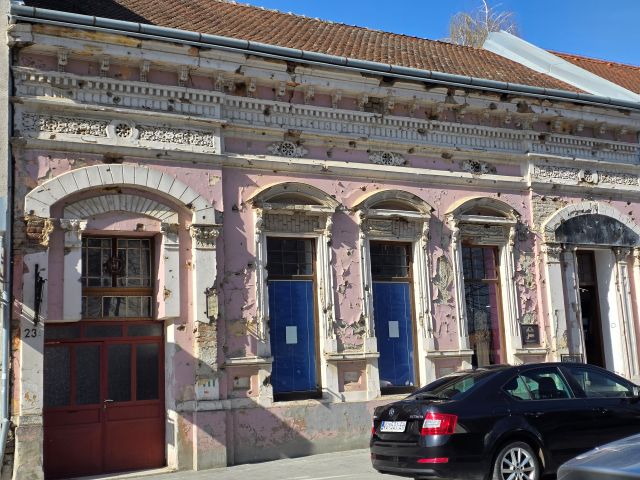
Some buildings still carry the scars of shellfire. The Vukovar Water Tower stands battered but preserved as a symbol of resistance. https://en.wikipedia.org/wiki/Vukovar_water_tower
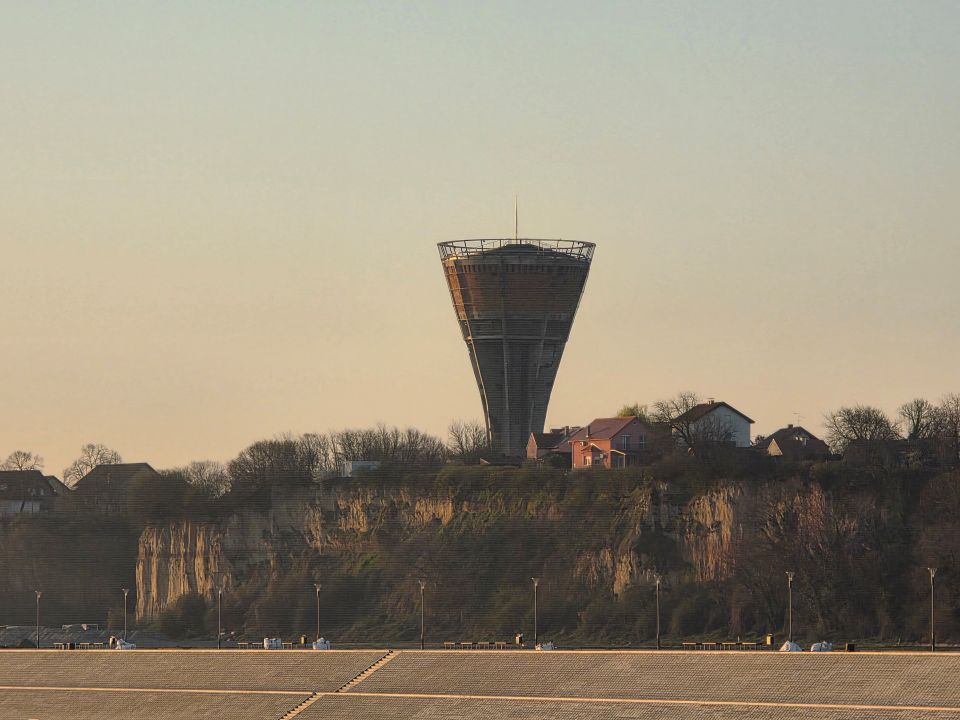
Our guide told us a little of the history of that water tower. It was built in Communist times with much fanfare, but within two months it began to leak, causing local flooding. Then somebody came up with the brilliant idea of using it as a restaurant (great views). But there was no lift. So that was another serious fail. These days it’s a memorial. And it will cost you 10 euros to ride the lift to admire the view.
We were also told the story of a stork. Malena was rescued after being badly injured, her wing damaged so badly she could never fly again. A local man gave her a home on his roof in Vukovar, where she lived until she died of old age. Each spring, her mate Klepetan returned from South Africa, flying thousands of kilometres to find her waiting. Year after year, he came back to the same nest, the same partner. In a town marked by loss, their story feels quietly defiant, a reminder that some bonds don’t break.
Walking through the town today, life clearly continues. Shops are open, people go about their day, and the Danube flows quietly past the rebuilt streets. But the scars of war remain because people can’t afford to rebuild.
The memorials, the damaged walls, and the stories of people like Jean-Michel Nicolier ensure that the events of 1991 remain part of the town’s identity, a reminder of how fragile peace can be and how deeply a community can carry the memory of war.
Once again, we enjoyed a lovely sunny day for our walk around the town. After lunch we sailed on down the Danube, between Croatia on the starboard bank and Serbia on the port bank.
If you enjoyed this article you might enjoy my books. My science fiction romance book The Iron Admiral: Conspiracy is free if you sign up for my newsletter. It’s fast-paced action all the way as star-crossed lovers race to stop a holocaust.
If you’ve missed any of the posts for this trip, go here. Europe 2026